- Photograph the whole card — stains, creases and corrections — not just the text.
- Note who made it, which occasions it belonged to, and what people remember.
- Record the cook explaining it in their own voice while you still can.
- Keep photo, note and audio together, and share it with the family you choose.
A recipe card in a grandparent's handwriting is often one of the most emotional things a family keeps. The ingredients are easy to find elsewhere. The slant of the writing, the splash of batter in the margin, the way she abbreviated "tablespoon" — those exist on exactly one piece of paper. This guide is about saving all of it, so your family recipe book carries the person, not just the dish.
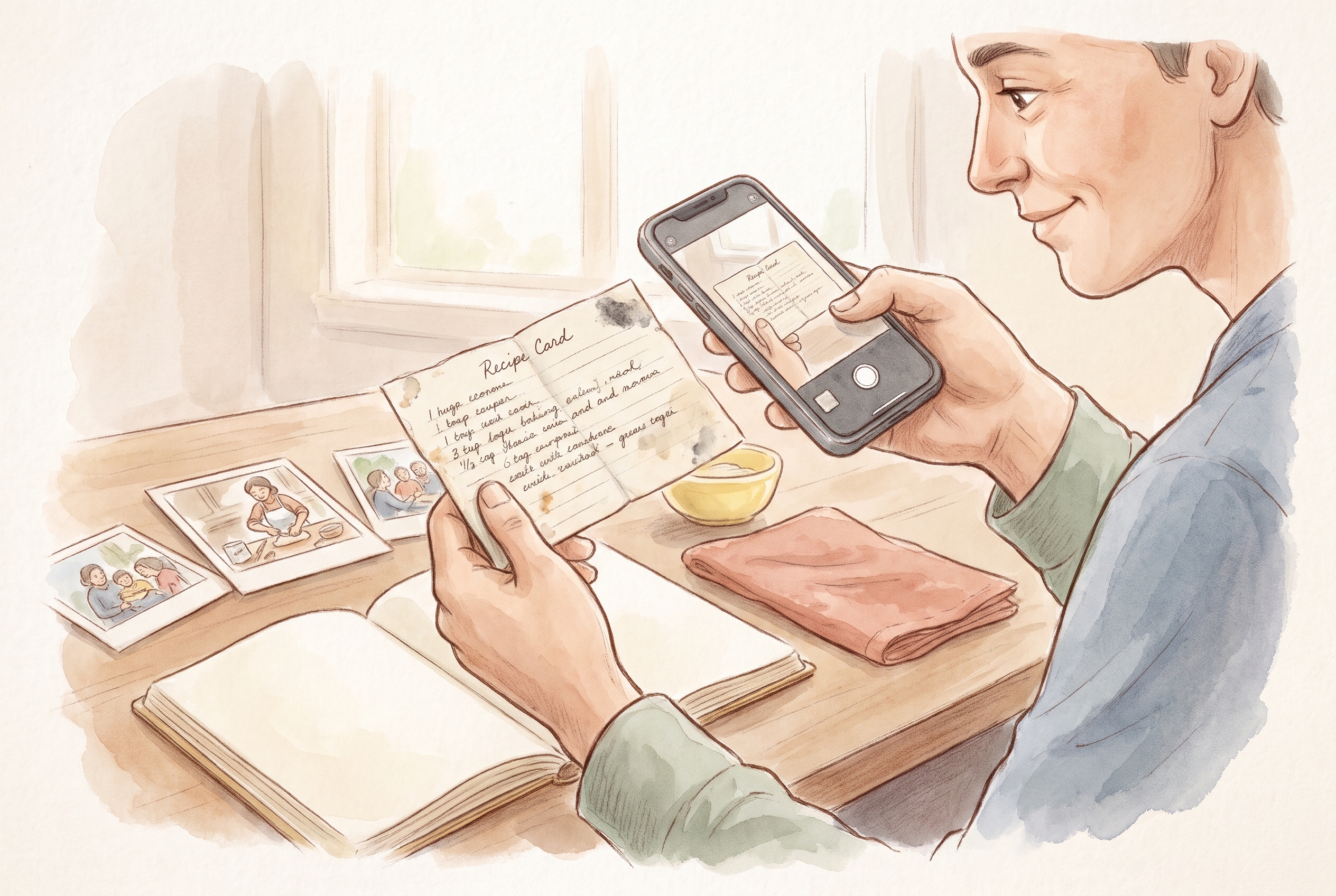
Photograph the card, not just the text
Capture the physical card first, because the object holds as much as the words. A clean retyped recipe loses the handwriting, the fold lines and the forty years of use.
- Lay the card flat on a plain surface near a window. Daylight from the side shows the texture of the paper without harsh glare.
- Shoot the whole card in one frame, slightly from above, so the corners and edges are visible. The wear is part of the record.
- Take a second, closer shot of any detail that matters: a note in a different pen, a correction, a child's crayon mark.
- Photograph the back too if there's anything on it — a date, another recipe, a name.
- Keep the original. A photo is a backup, not a replacement. Store the card somewhere dry and flat.
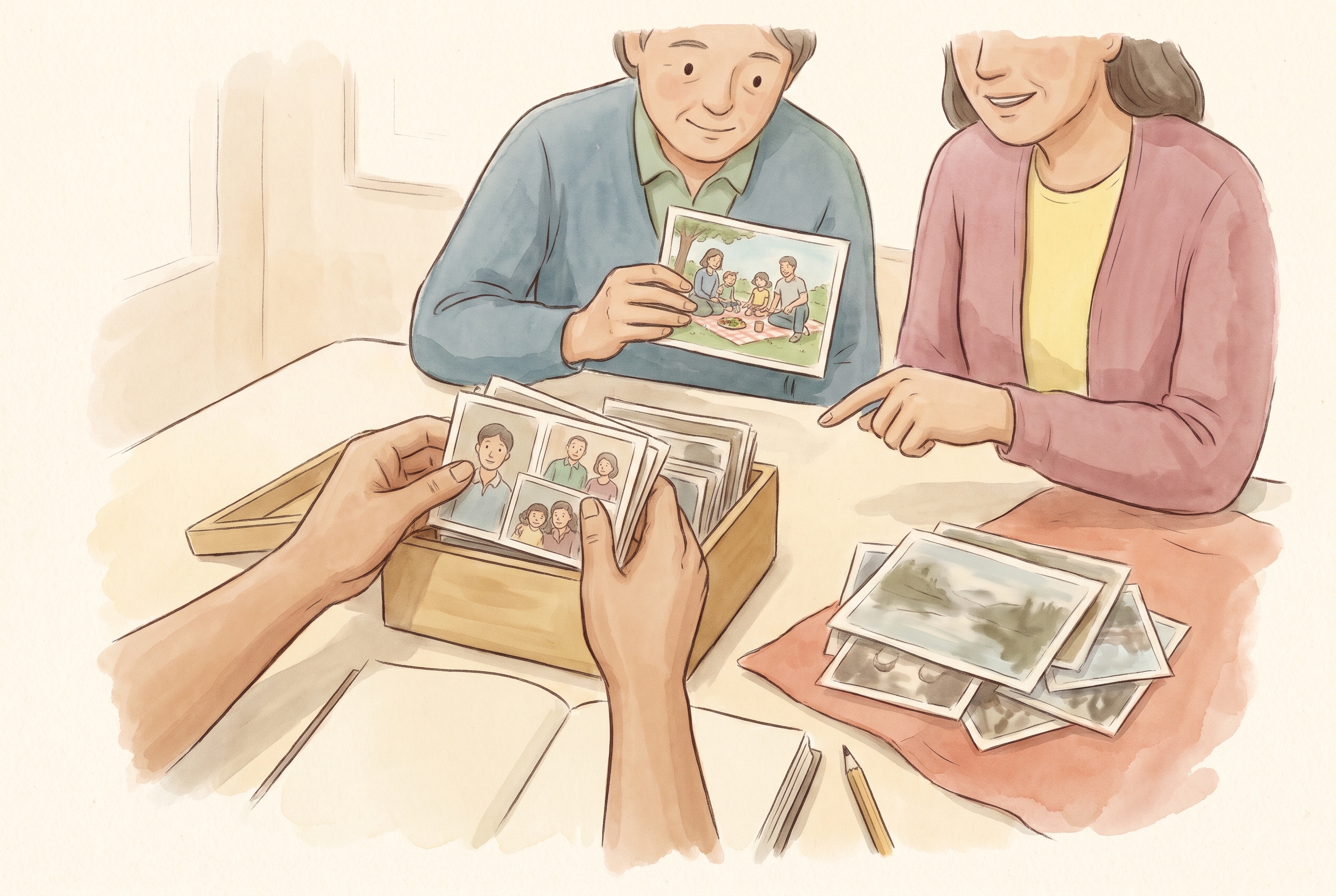
If you have a stack of cards, you don't have to type them to save them. Getting the photos into one place is the first win — bringing photos into a journal means they live with the notes you add next, rather than in a camera roll you'll scroll past.
Write down who, when and why
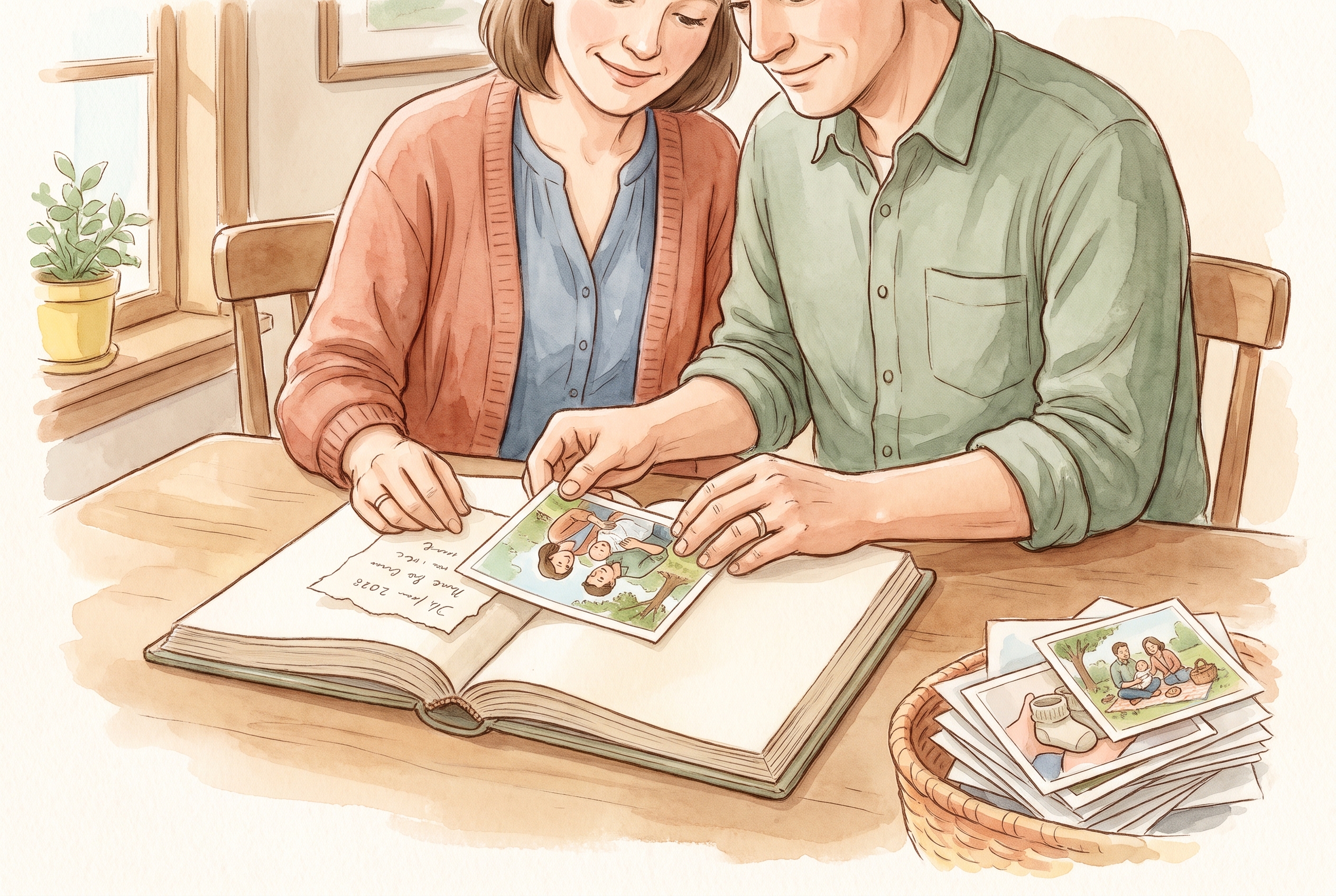
A recipe without context is just instructions. Note the three things that make it yours: who made it, when it appeared, and what people remember. Do this while someone who knows can still tell you.
- Who made it, and who they got it from if that's known. Don't guess ancestry — write what's actually remembered, and mark anything uncertain as uncertain.
- The occasions it belonged to: Sunday dinners, the first cold morning of autumn, a birthday every single year.
- A sensory detail — the smell that filled the kitchen, who always got the corner piece, the argument about whether it needed more salt.
- Any small fact about the recipe itself: the oven that ran hot, the one pan it had to be made in.
Honesty matters more than polish here. If you remember the dish but not the exact year, say roughly when. It helps to keep a remembered story separate from an exact quote so later readers know what's documented and what's fond memory.
Record the cook explaining it
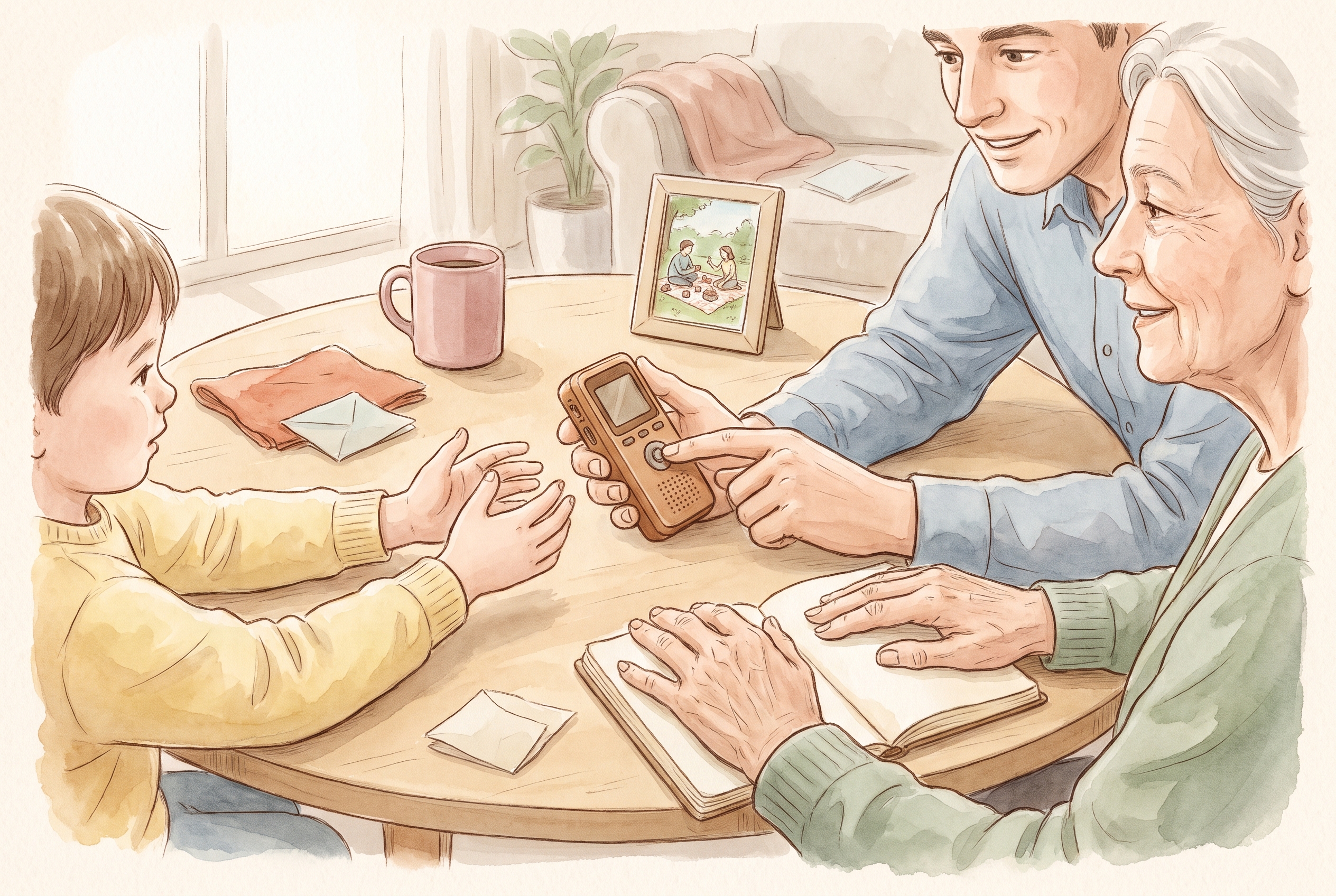
If the cook is still around, record them talking through the recipe. Voice holds things writing can't — the pauses, the "you'll know when it's ready," the laugh at a step she never measured.
You don't need a studio. A phone voice memo in a quiet kitchen is plenty. Ask open questions and let them wander: Where did you learn this? Who taught you? What did you change over the years? Many of the best details arrive off-topic. If you want prompts to get them started, our questions to ask grandparents works just as well in the kitchen. Audio sits naturally beside the photo and notes in one entry, so the recipe, the story and the sound of their voice stay together.
Turn the loose pieces into something that reads
Once you have the photo, the note and the audio, give the recipe a home where they stay linked. Scattered across a phone, they drift apart; the voice memo ends up in one app and the photo in another.
Keep the entry simple: the photographed card, your short note about who and when, and the recording. You can type the ingredients cleanly underneath if you want it readable for cooking — but don't delete the handwritten image to tidy up. Both versions earn their place. If you're assembling many recipes, treat it the way you'd approach organizing a year of memories without rewriting it: save first, arrange later.
Share it with the family who'll cook from it
A recipe book that only you can see doesn't get used. Decide who should have it — siblings, cousins, the next cook in the family — and share it with those chosen people rather than posting it publicly. You control who's invited to see a family memory, so the card and the story go to the people it belongs to and no further.
When you add an illustrated or printed-style page, keep it honest about what it is. An illustrated page built from a real memory can make a keepsake feel finished, but the photographed card and the recorded voice are the record; the illustration is decoration around them. Don't let a pretty page quietly replace the true thing.
An honest limitation
A tool can help you caption a photo or lay out a page, but it cannot recover what wasn't saved. It should not invent where a recipe came from, reconstruct a voice you never recorded, or fill a factual gap and present it as true. If you don't know who first made the dish, the record should say so. Kaiary's own privacy choices — invited audiences and optional features — are set out in our privacy promise; for anything about the app itself, our support team can help. The point of saving a recipe this carefully is accuracy, so keep the honest blanks blank.
Kaiary as one place to keep it together
If you want the photographed card, the who-and-when note and the recording to live in one entry instead of three apps, Kaiary is built for exactly that. Bring the recipe photos in, add your note, attach the voice memo, and share the result with the family members you choose. It's one specific way to make a family recipe book that keeps the stories, not only the measurements — and the originals stay in your drawer either way.
The recipe is the ingredients. Everything that made it worth keeping is in the handwriting, the occasion and the voice.
Should I retype my grandmother's handwritten recipes?
You can type a clean version for cooking, but keep a photo of the original card too. The handwriting, fold lines and margin notes are part of what you're saving and can't be recreated once lost.
What's the best way to record someone explaining a recipe?
A phone voice memo in a quiet kitchen is enough. Ask open questions about where they learned it and what they changed, and let them wander — the best details often come off-topic.
How do I keep recipe photos, notes and audio from getting scattered?
Save all three to one entry rather than spreading them across different apps. Keeping the photographed card, the written note and the recording linked together is what makes a family recipe book usable later.