- Sort the whole box into three piles first — people and stories, places and events, overflow — before judging any single print.
- Record older relatives naming the faces now; the name and story are far harder to recover than the image.
- Offer place-and-event photos to relatives, local historical societies, and archives — ask before you donate.
- Let duplicates and anonymous blurry shots go without guilt; keeping everything honours no one.
The boxes usually arrive after a death or a downsizing. They are heavy, unlabelled, and faintly accusing. Someone kept these for sixty years, so throwing any away feels like throwing away the person. That feeling is real, but it is not a filing system. You can be gentle with the grief and still be decisive with the prints.
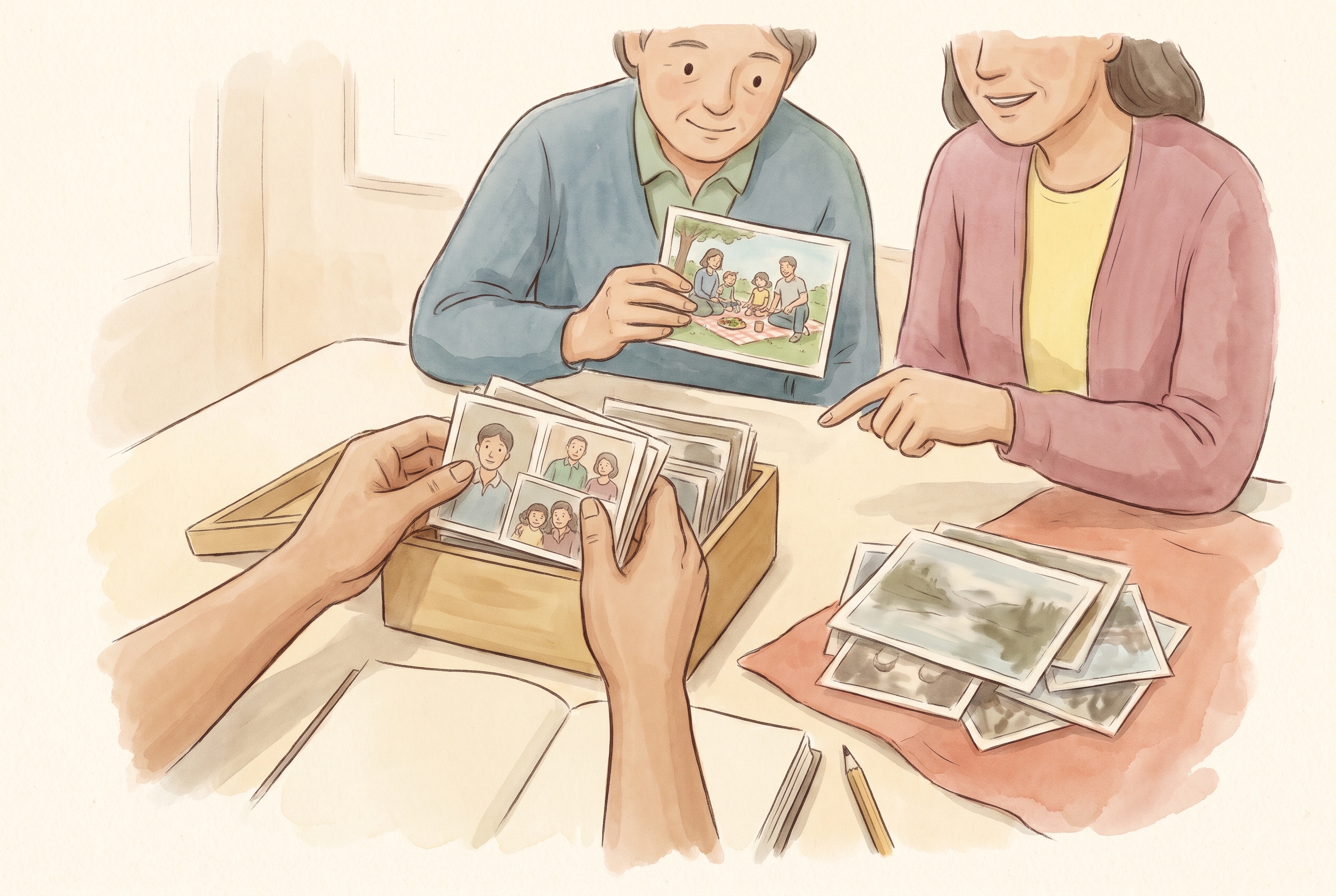
Start by sorting into three piles, not one
The fastest way to stop feeling overwhelmed is to split the box before you judge any single photo. Three piles do the work.
- People and stories: anyone you recognise, gatherings, portraits, and the few shots that clearly meant something to the person who kept them. These are the keepers.
- Places and events: streets, shopfronts, a school, a parade, a wartime posting. These may matter to someone, just not necessarily to you.
- Duplicates, blurry frames, and anonymous landscapes: the overflow. Most boxes are more than half this.
Sort first, decide second. Handling each print once to assign a pile is far easier than agonising over whether to keep it forever.
Keep the photos with people and stories, and scan those
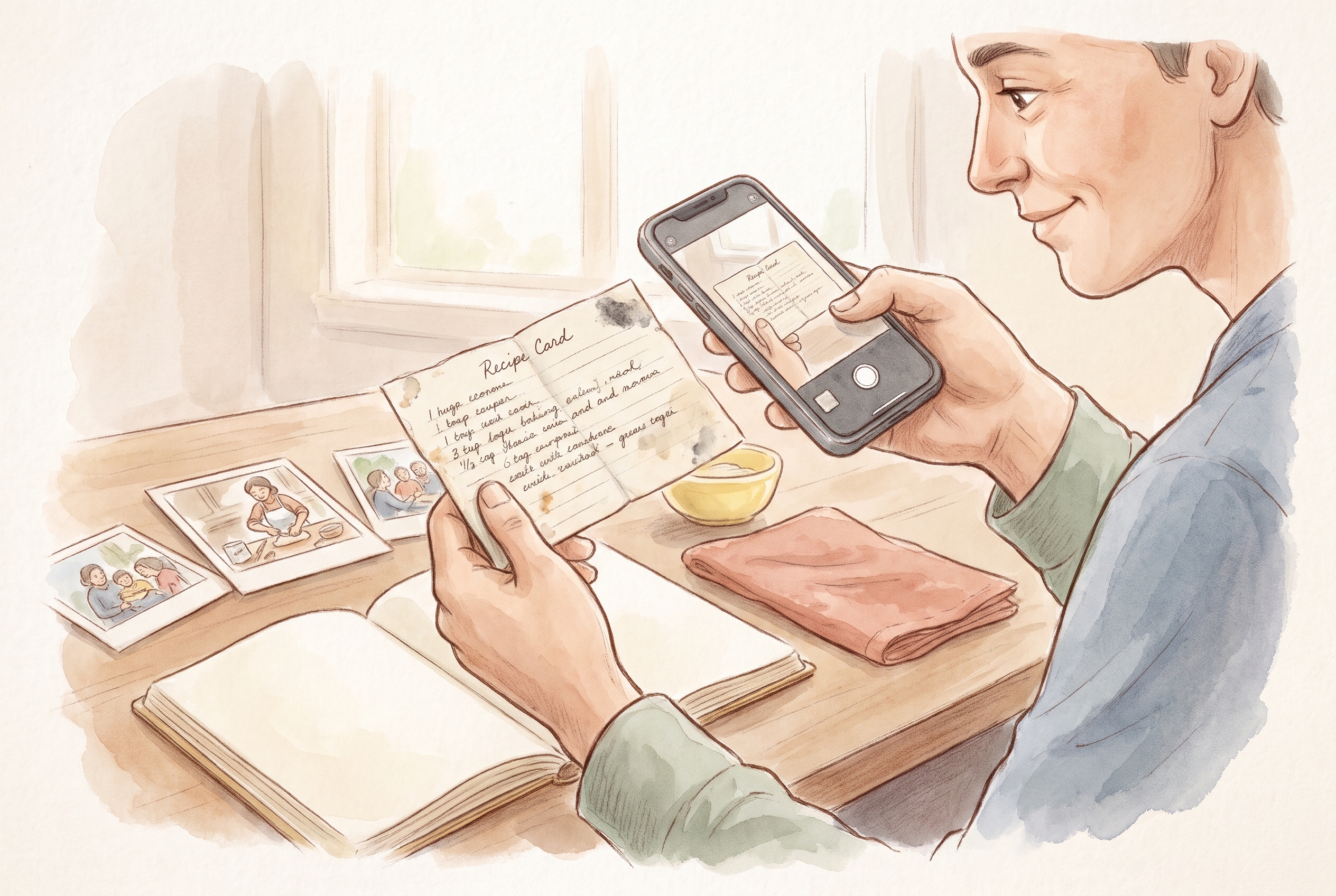
The keepers are the small pile where a face meets a memory. Scan these so the story survives the paper. You do not need a professional setup; a steady phone camera in good light captures a print well enough to keep. The point is not perfect reproduction, it is making sure the people and what you know about them stay together in one place.
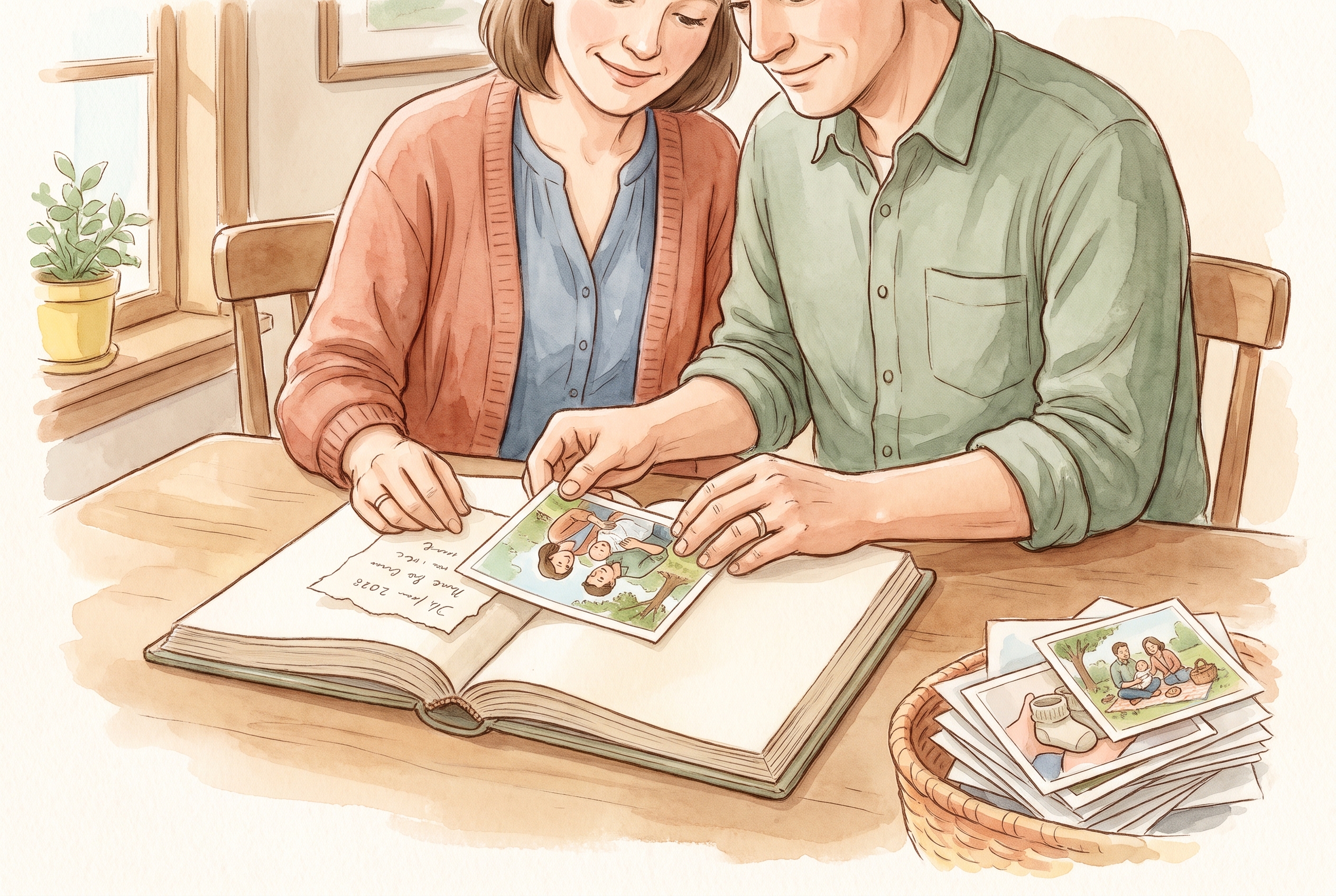
When you bring scanned prints into a memory journal, the picture and the story should sit on the same page, not in two different apps. Kaiary's photos into your family journal is built for exactly that: the image and the few lines you know about it travel together. For keeping a whole box organised without rewriting your whole life, our guide on organising a year of memories without rewriting it has a lighter approach you can borrow.
Ask the older generation while they can still name faces
This is the most time-sensitive thing in the box, and it is more important than any scan. Once the people who can identify the faces are gone, an unlabelled photo becomes a stranger forever. Genealogists and family-history archivists make the same point repeatedly: the name and the story are harder to recover than the image.
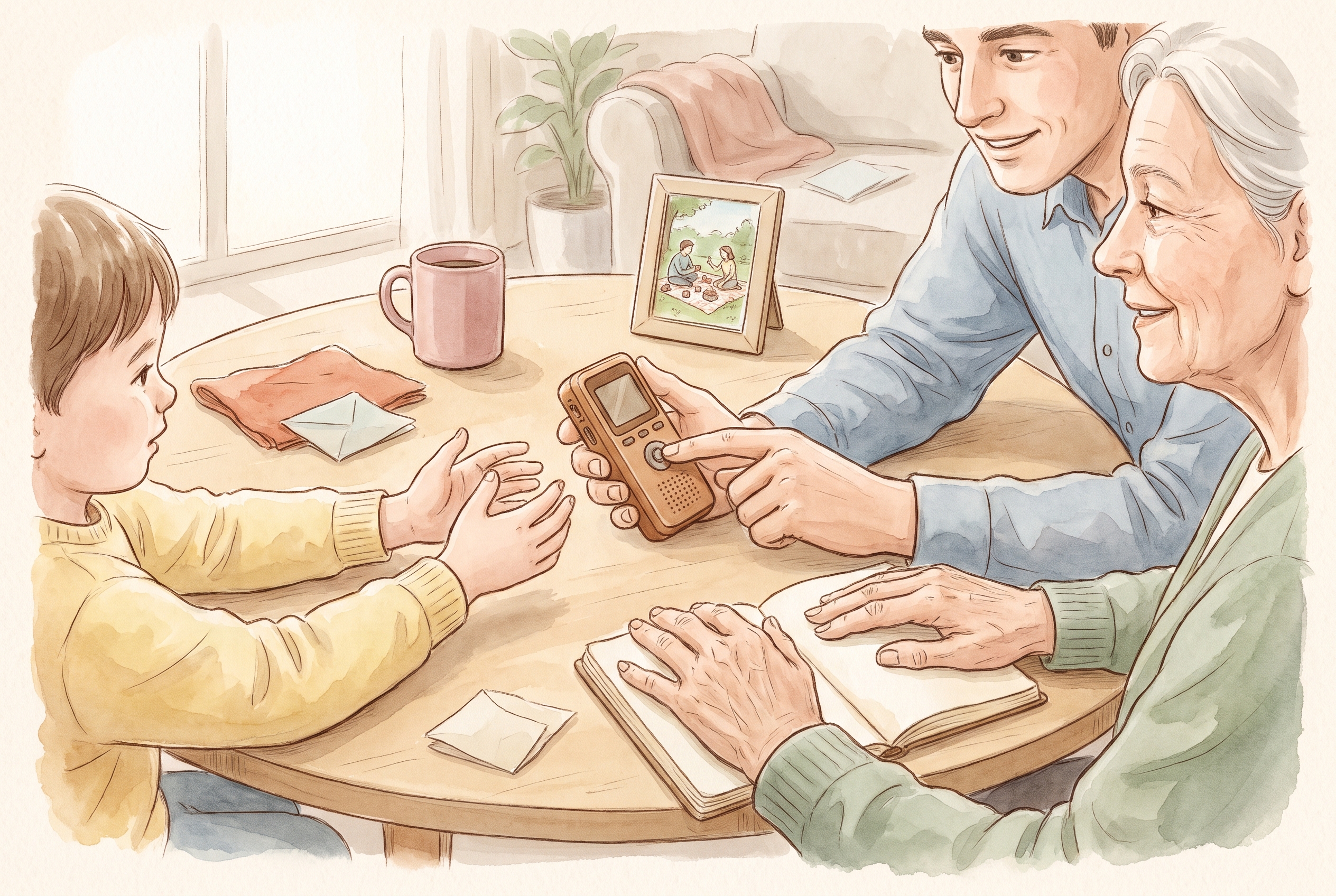
Sit down with a parent, aunt, or grandparent and a handful of prints at a time. Record what they say rather than trying to write fast; a phone voice memo keeps their actual words and the sound of them. Ask open questions: who is this, where was it taken, what was happening that day. Our list of questions to ask grandparents works just as well held up next to a photo as it does at the dinner table.
Offer the places and events to people who actually want them
The second pile is not yours to throw away, but it is not yours to store forever either. Pass it along. Three routes work well:
- Relatives first: a cousin who lives in the old town, a sibling who was closer to that side of the family. Offer by text with a quick photo of the stack; take their silence as a no and move on.
- Local historical societies and county archives: photos of old streets, shops, schools, factories, and public events are genuinely valuable to them. Email the society for the area the photo shows and ask whether they accept donations before posting anything.
- Community and heritage groups: regimental associations, church records, and local history Facebook groups often want images of specific places and will identify them for you.
Archives have their own donation rules and collecting priorities, so ask first and let them decide what fits. Giving a photo a home where someone wants it is a better outcome than a box in your loft.
Let go of duplicates and blurry landscapes without guilt
The third pile is the one guilt clings to hardest, and it is the one you can release most freely. Three prints of the same sunset are not three memories. A blurry field with no people is not a memory at all. Keeping everything does not honour your grandmother; keeping what shows her does.
Give yourself a rule so you don't re-litigate each print: if it has no recognisable person and no story anyone can tell, it goes. Recycle photo paper where your local service allows it. You are not deleting a person. You are deciding not to pass an unsorted burden down to the next generation, which is a kindness to them.
Not every photo is a memory. Keep the ones that still have a name attached, and let the rest go lighter than they came.
Where the keepers live afterwards
Once the box is sorted, the scanned keepers need a home that isn't a hard drive you'll forget the password to. Kaiary is a private family memory journal where the scanned photo, the names you recovered, and the recording of your aunt explaining them all sit in one entry, and you choose who sees it through chosen family audiences. Some optional features use documented third-party providers to help with things like captions; what those do is described in our privacy promise, and the people you invite are always your choice. It is one specific way to make sure the work you just did on that box doesn't have to be done again.
If you're also thinking about who inherits all this one day, our piece on digital legacy for family photos is a sensible next read.
Is it wrong to throw away old family photos?
No. Duplicates, blurry frames, and anonymous landscapes with no story attached are not memories. Keeping the photos that show recognisable people honours the person who kept them better than storing an unsorted box forever.
Who wants old photos of streets, shops, and local events?
Local historical societies, county archives, church records, and community heritage groups often value photos of specific places and public events. Email the society for the area shown and ask whether they accept donations before sending anything.
How do I find out who is in an unlabelled old photo?
Ask the oldest relatives who might recognise the faces, and do it soon. Show a few prints at a time and record their answers as a voice memo so you keep both the names and the way they told the story.