- Ask about one specific moment or object, not a broad topic — specificity is what produces a story.
- Hand a few questions to the youngest person and point them at the oldest; kids draw out answers adults can't.
- Capture just one or two answers in the moment: a short voice note and a single written line, not the whole evening.
- Mark what's a real quote versus your memory of it, and only record people who are comfortable being recorded.
Why specific questions beat open ones
A good question hands someone a scene to walk back into. Oral-history interviewers — the kind who record elders for archives like StoryCorps — build their prompts around a single time, place or object, because memory is organized by episodes, not categories. "Tell me about your childhood" is too big to answer. "What did your kitchen smell like on a Sunday?" is small enough to picture and generous enough to lead somewhere.
So aim your starters at one concrete thing: a first job, a specific dish, a particular year. The specificity does the work. You don't need to be a skilled interviewer; you need to point at something real and then stay quiet long enough for the person to find it.
25+ Thanksgiving conversation starters, light to deeper
Start light so everyone warms up, then move toward the questions that hold a story. Pick a handful — you won't get through all of them, and you shouldn't try.
Light, to warm up the table:
- What was your favorite thing to eat as a kid that nobody makes anymore?
- What's the best meal you've ever had, and who were you with?
- What song instantly takes you back somewhere?
- What's a smell that means "home" to you?
- What did you want to be when you grew up at age ten?
- What's the most useless thing you're weirdly good at?
Middle, for stories with a shape:
- What's the first car you ever drove, and where did it take you?
- Tell me about a teacher who changed something for you.
- What's the bravest thing you did before you turned twenty-five?
- What was your first paying job, and what did it teach you?
- Who in this family do I remind you of, and why?
- What's a trip that didn't go to plan but turned out better?
- What was happening in the world the year you were my age?
- What's a decision you almost didn't make?
Deeper, once the room is comfortable:
- What's something you believed strongly at twenty that you've changed your mind about?
- Who taught you how to cook, and what do you still make their way?
- What's a tradition in this family, and do you remember how it started?
- What's the hardest year you've lived through, and what helped?
- What do you hope people remember about you?
- What's a piece of advice you got that you've never forgotten?
- What were your parents like when they were young?
- Is there a story about me as a baby you've never told me?
- What's something you're grateful for this year that surprised you?
- What do you miss about a decade that's gone?
- What's a risk you're glad you took?
- What would you tell your younger self the morning of a big day?
If you want a fuller set aimed at elders specifically, our list of questions to ask grandparents goes deeper into family history and heirlooms.
Let the youngest ask the oldest
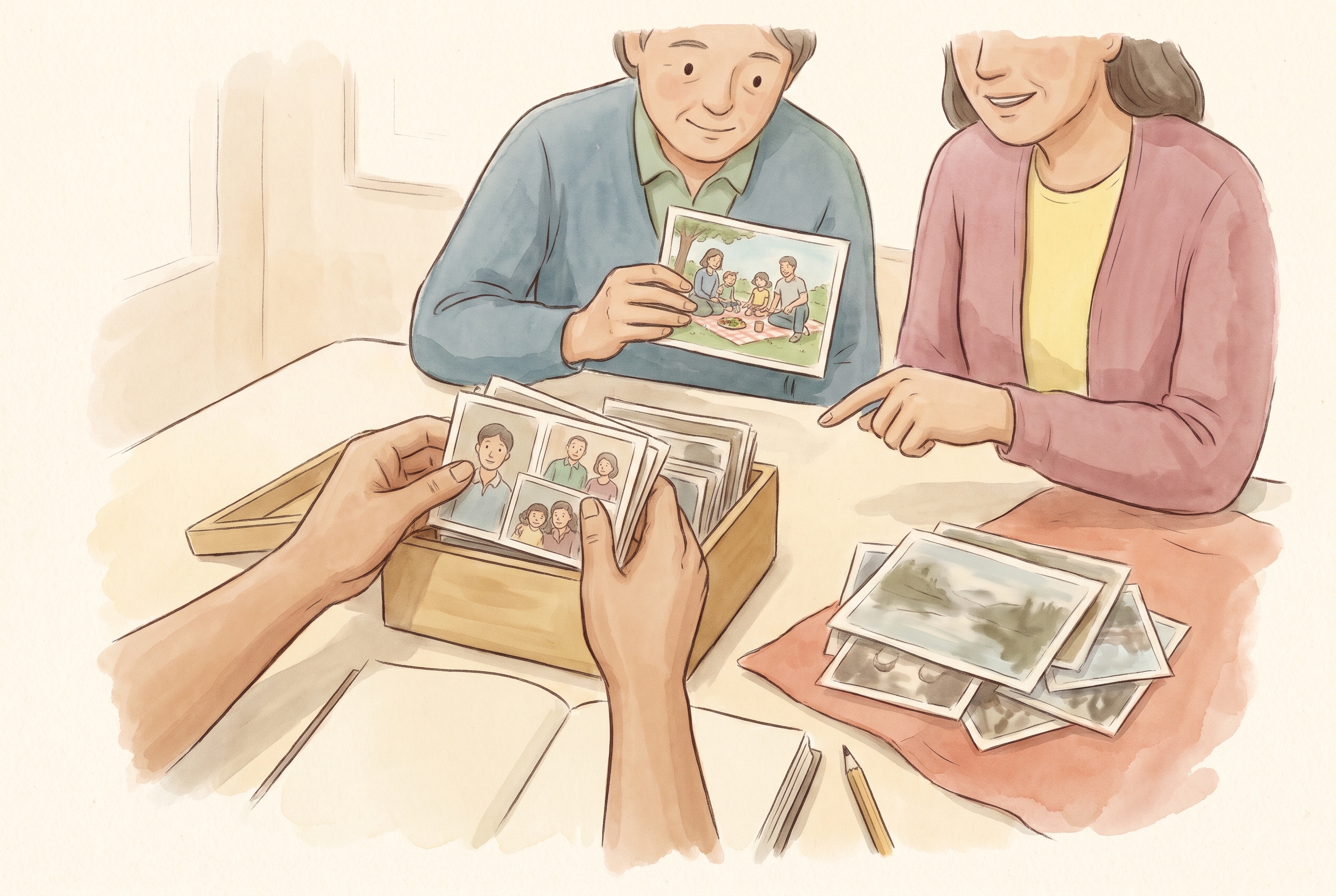
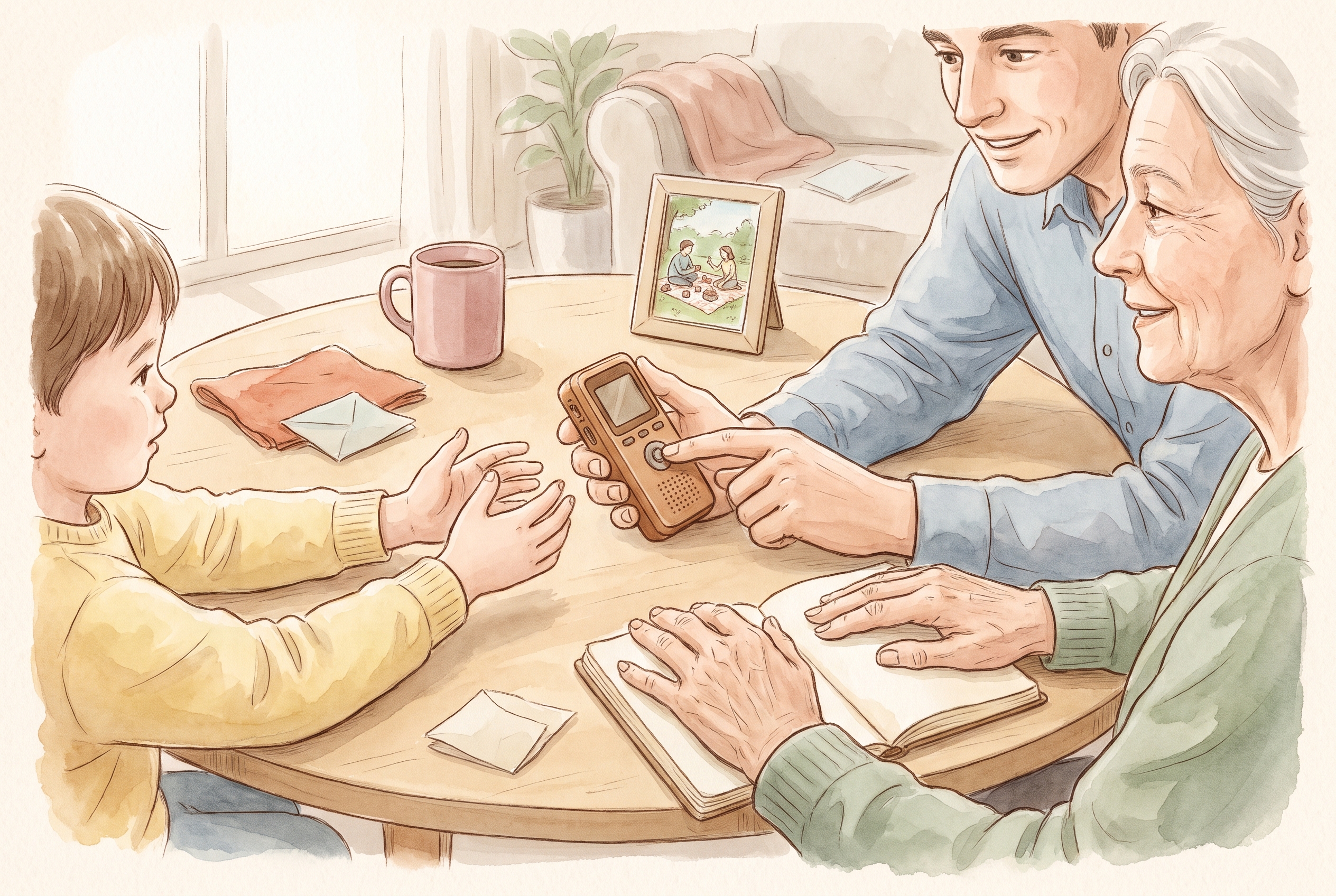
The single best move at a holiday table: hand the questions to a child and point them at a grandparent. Kids ask without the caution adults carry, and grandparents answer a grandchild more openly than they'd answer across a crowded room. The generation in the middle can sit back and listen.
Write three or four of the starters above on index cards and let a younger relative pick one to ask. You're not quizzing anyone — you're giving the shyest storyteller at the table a reason to begin. The funny, unguarded answers that come back are worth keeping; if you write down the ones that make everyone laugh, you'll find our note on funny things kids say useful for how to catch them before they evaporate.
Keep the best answers before they're gone
The answer you'll want in ten years is the one you heard tonight and forgot by December. Two quick captures, chosen in the moment, beat trying to remember the whole evening afterward.
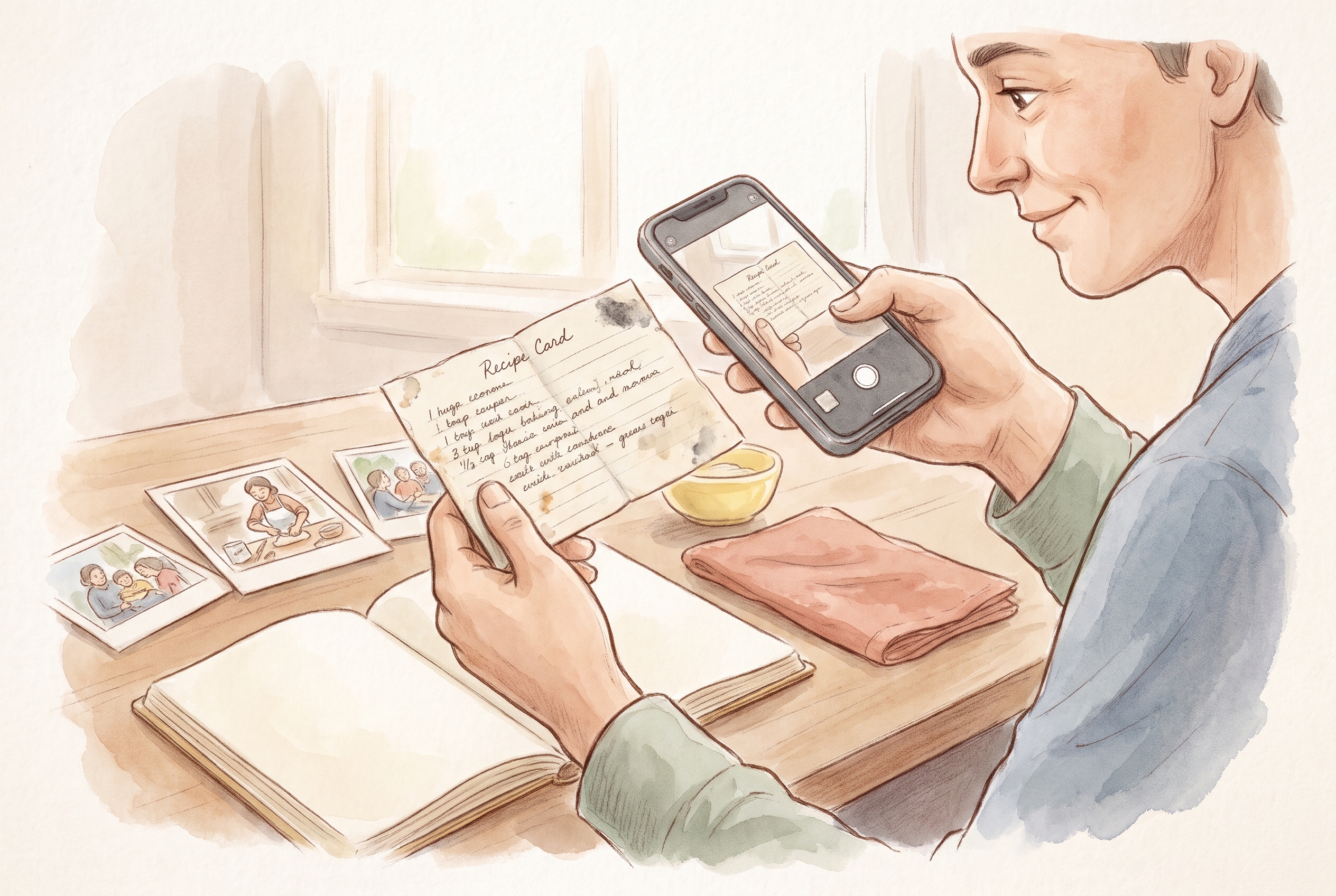
- Put a phone on the table and record one answer as a voice note. Thirty seconds of a grandparent describing their first kitchen keeps the actual sound of their voice, not your paraphrase of it.
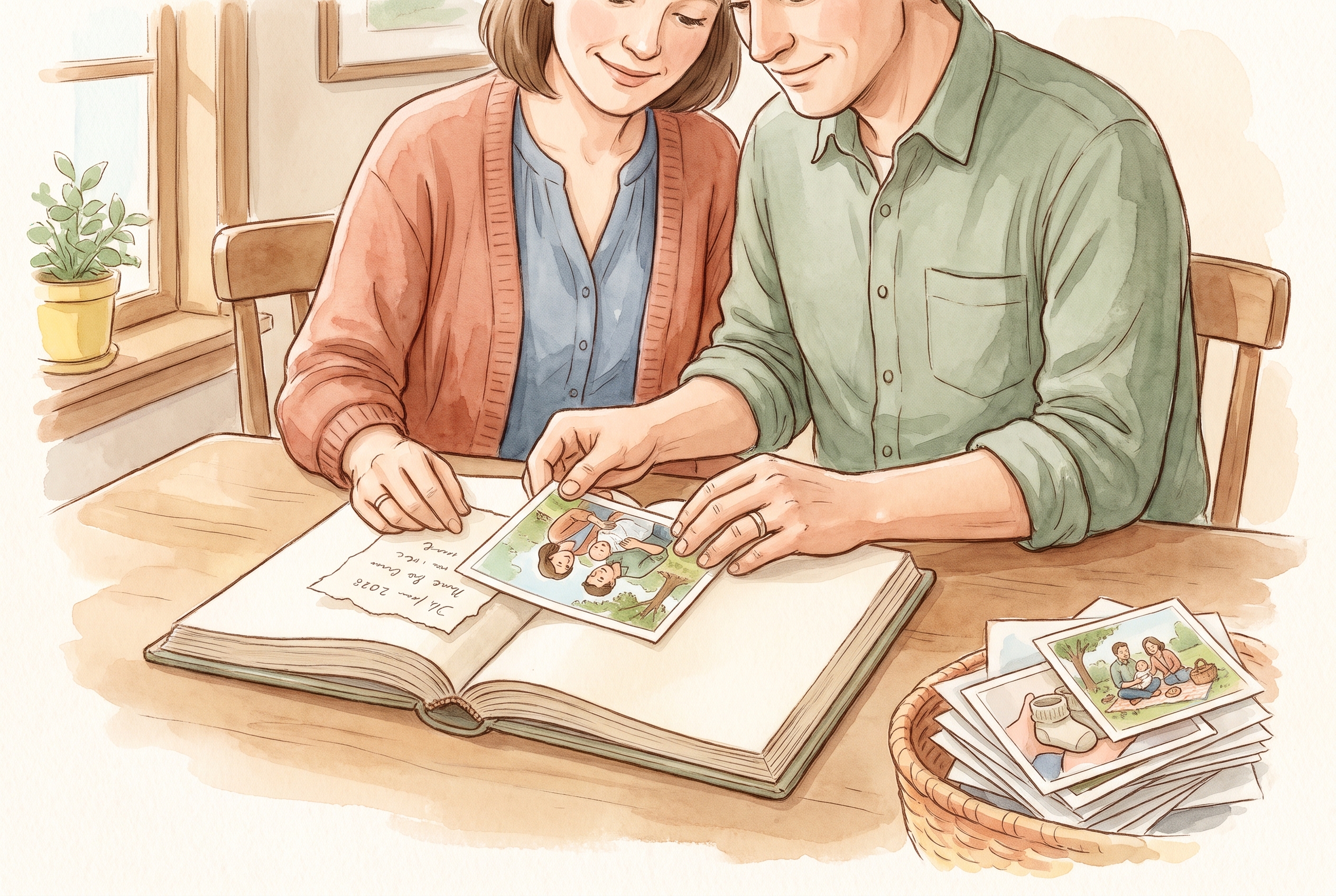
- Before bed, write one line of what was said and who said it — the fact, not a polished version. "Grandpa said the smell of diesel still reminds him of his father's garage."
- Mark which is a real quote and which is your memory of the gist. The difference matters later; our guide on telling a remembered conversation from an exact quote explains why.
Read the room and leave space
Not every question lands, and that's fine. If a deeper prompt touches a hard year, let the person steer; don't press for a tidy ending. Silence after a question isn't failure — it's someone deciding what to say. Count to five before you jump in with a follow-up.
These starters travel to any holiday gathering, not just Thanksgiving. The point isn't the occasion; it's three generations in one room with a reason to talk. Birthdays, long Sunday lunches and quiet winter evenings all work the same way.
Where the answers can live together
A voice note on one phone, a written line on another, a photo from the table on a third — the pieces of a good evening scatter fast. A private family journal is built to hold them in one place: the recording of a grandparent's answer, the line you wrote that night, and the photo from the table can sit in a single entry instead of three different apps. You decide who sees it through family sharing, so the story reaches the relatives you choose and no one else. It's one option for making sure tonight's answers are still there next Thanksgiving.
Key takeaways
- Ask about one specific moment or object, not a broad topic — specificity is what produces a story.
- Hand a few questions to the youngest person and point them at the oldest; kids draw out answers adults can't.
- Capture just one or two answers in the moment: a short voice note and a single written line, not the whole evening.
- Mark what's a real quote versus your memory of it, and only record people who are comfortable being recorded.
What are good Thanksgiving conversation starters for all ages?
Specific, concrete questions work across generations: "What's the first car you ever drove?", "What did your kitchen smell like as a kid?", or "What were your parents like when they were young?" Start light and move to deeper questions once the room is comfortable.
How do I get quiet relatives to tell stories at the table?
Let a child ask the question instead of you, aim it at one specific memory, and then stay quiet for a few seconds. People open up to a grandchild and to a question small enough to picture.
What's the easiest way to remember the best answers afterward?
Choose one or two answers in the moment: record a short voice note with the person's permission, and write a single line that night naming who said it. Two small captures beat trying to recall the whole evening later.