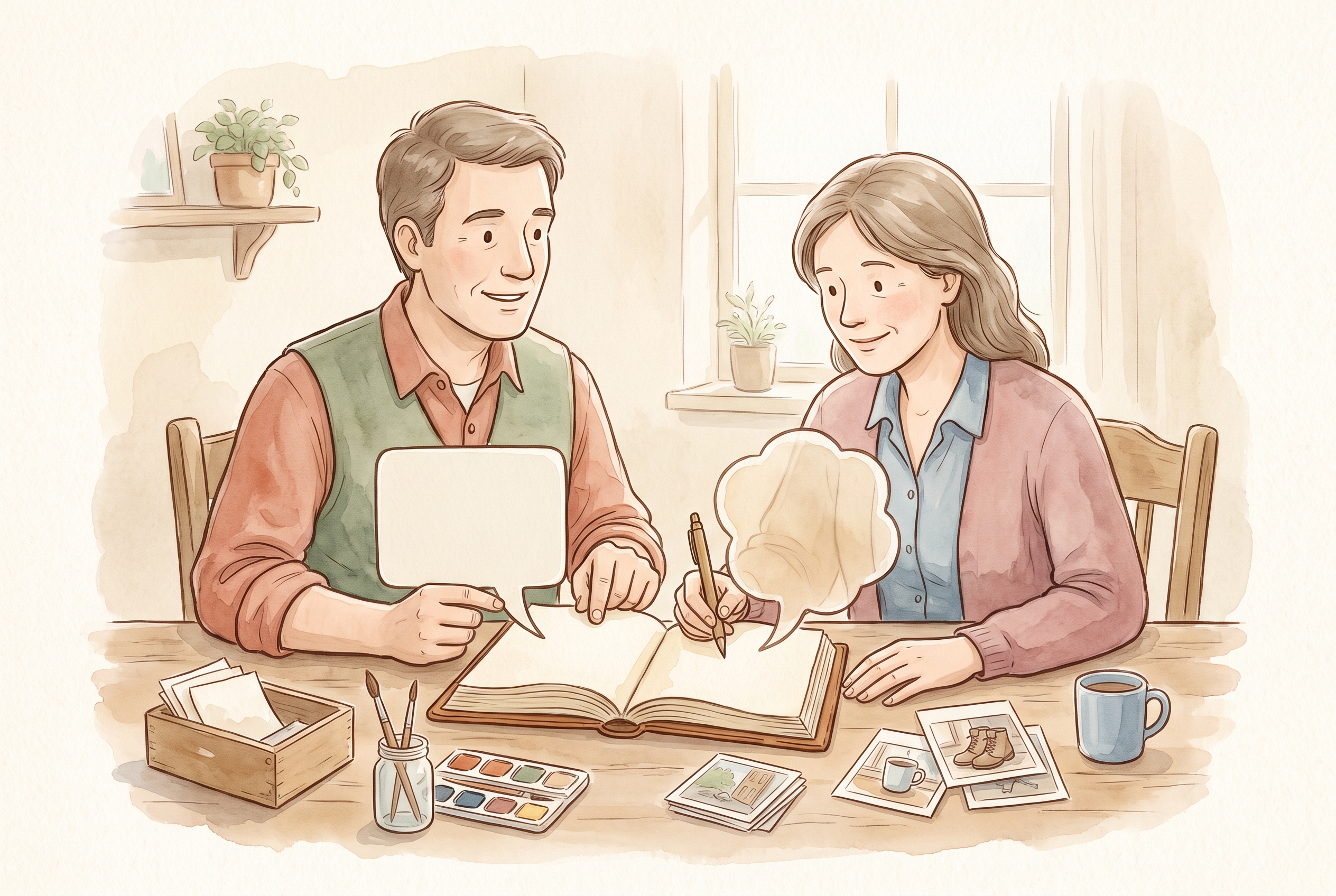
- Use quotation marks only for words you're confident are exact; flag everything else as paraphrase.
- Frame reconstructed dialogue honestly ('as I remember it, she said something like…') and name your source when it matters.
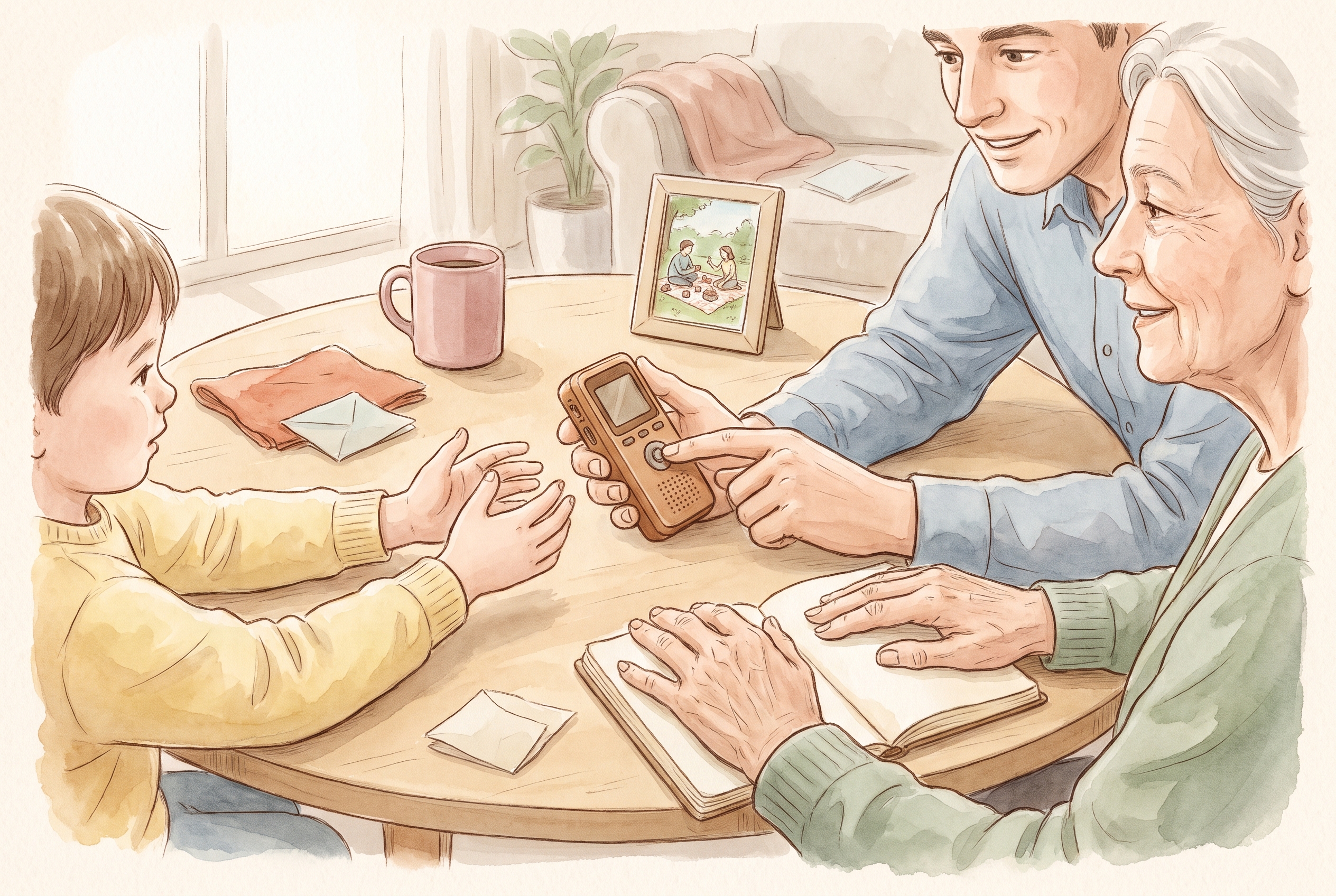
- Capture voice notes close to the moment so real quotes and your written account stay linked in one entry.
- Let AI tidy a caption or illustrate a page, but never let it invent dialogue or reconstruct an unrecorded voice as fact.
The safest habit is simple: write the exact words only when you truly have them, and clearly flag everything else as a paraphrase. A remembered conversation is real and worth keeping — but it is your account of a moment, not a transcript. Marking the difference protects your family's history from quiet distortion over time.
Why the difference matters in a family record
A journal earns its trust slowly. Years from now, a relative reading your entries has no way to check what happened except through your words. If you present a reconstructed line as a verbatim quote, you hand down a small inaccuracy dressed as fact. Do that often enough and the record drifts.
None of this means you should stop writing down conversations. Remembered dialogue carries tone, humour and relationship in a way that a summary never will. The goal is honesty about certainty, not silence. Keep the sound of her laugh and the shape of what she said — just be clear which parts you can vouch for word-for-word.
A quick test: could you swear to these exact words?
Before you put anything inside quotation marks, ask yourself a plain question: could you honestly say these were the words spoken, in that order? Usually the answer is no for a whole exchange but yes for a phrase. A memorable one-liner tends to survive intact; the sentences around it are usually reconstructed.
- If you recorded it or wrote it down at the time, you likely have the exact words.
- If a phrase was repeated often as a family saying, it may be reliable.
- If you're rebuilding the flow of a talk from memory, treat the whole thing as paraphrase.
- If you're unsure, default to paraphrase — it costs you nothing and protects the record.
How to mark paraphrase and exact quotes clearly
You don't need a formal system, just a consistent one. Pick conventions and use them every time so a reader learns to read your signals.
- Reserve quotation marks for words you're confident are exact. If even one word is a guess, drop the marks.
- Introduce reconstructed dialogue with honest framing: 'as I remember it, she said something like…' or 'the gist was…'
- Name your source of certainty when it matters: 'I wrote this down that evening' or 'this is from the voice note.'
- Separate an invented example from testimony. If you sketch how a scene might have gone to illustrate a point, label it clearly as imagined, never as what was said.
Capture the exact words while they're fresh
The single best way to have real quotes is to catch them close to the moment. A voice note taken minutes after a conversation preserves rhythm and word choice far better than memory a week later. Keeping the audio alongside the written entry means the sound and the words live together, and you can always return to the source.
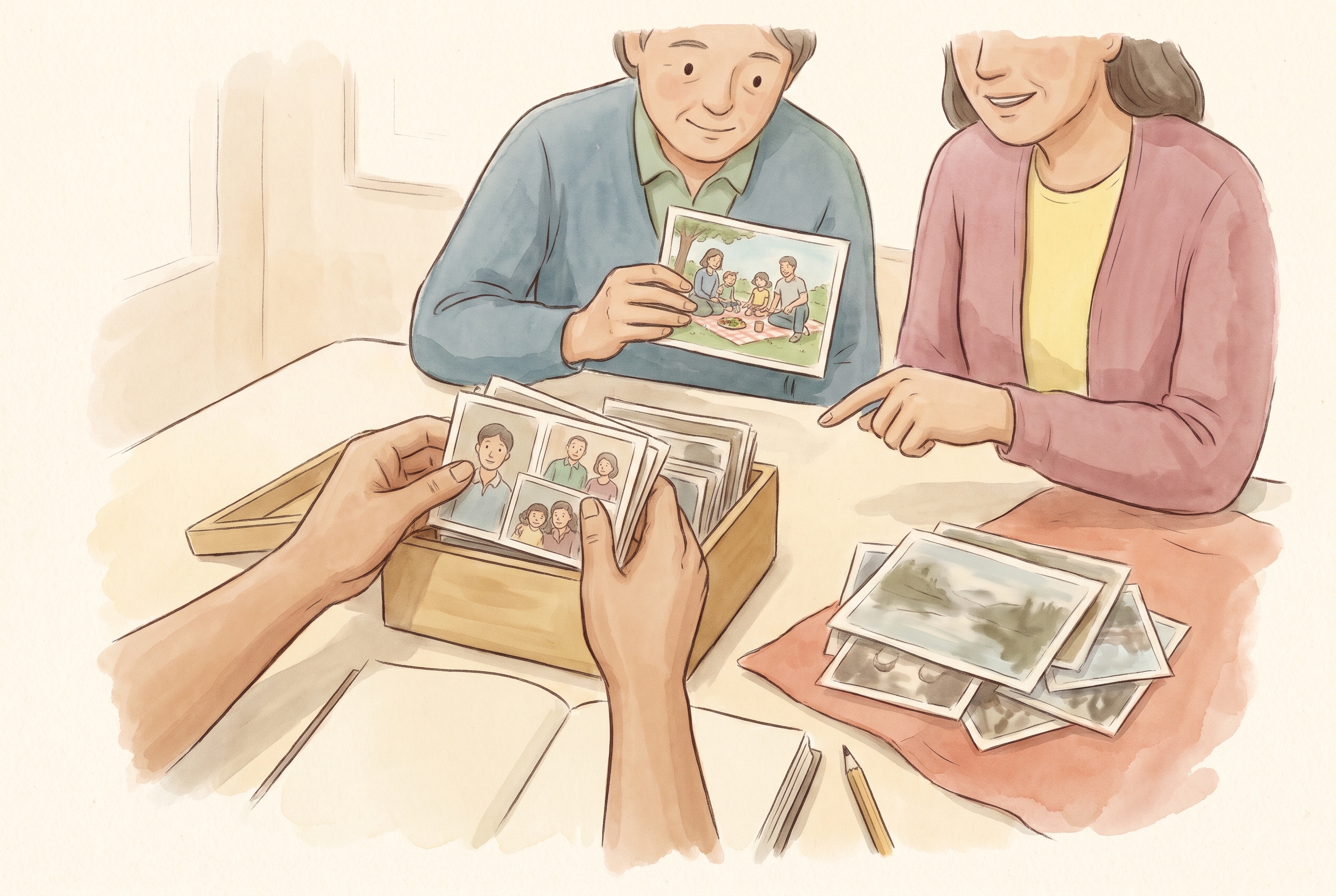
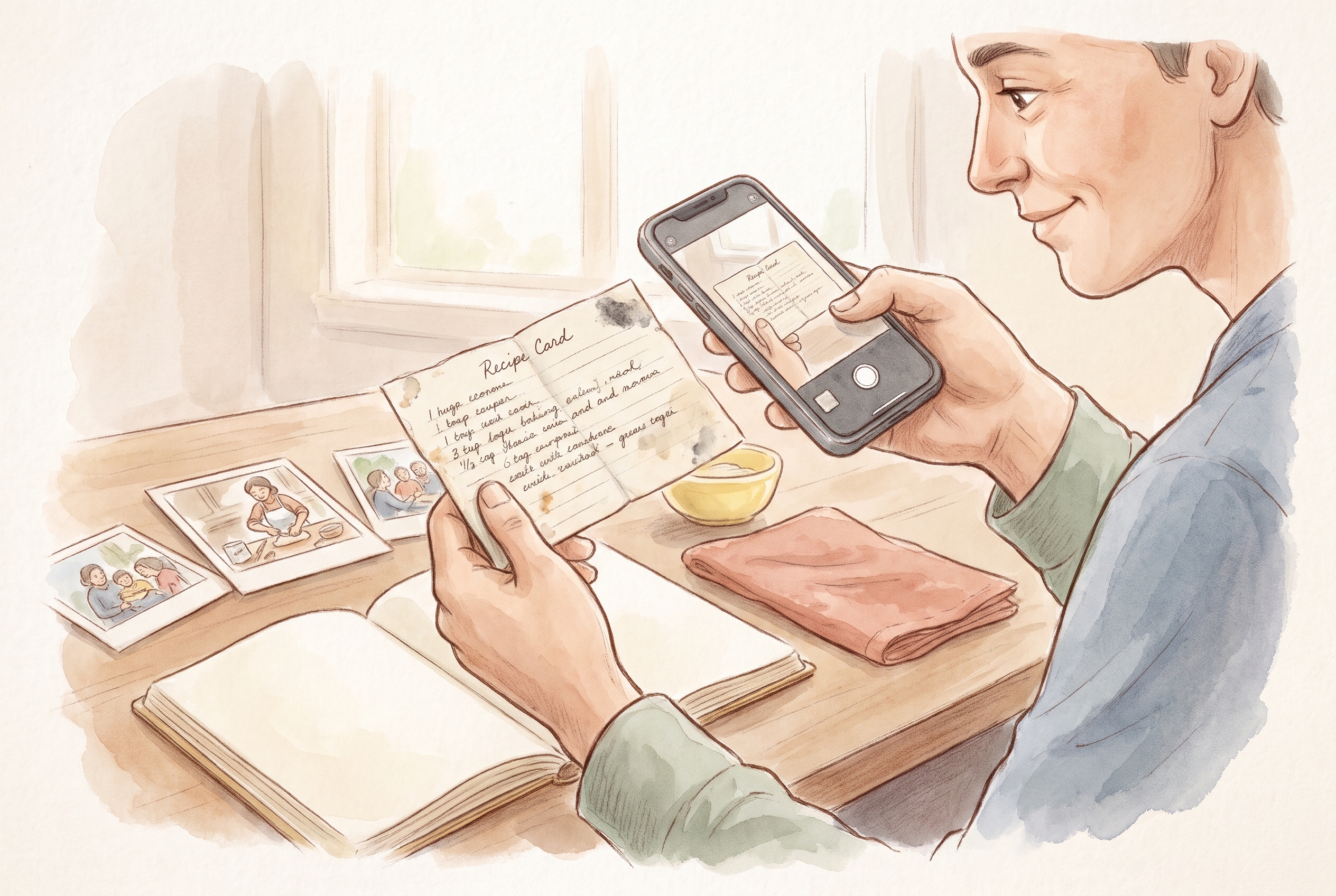
In your family journal, photos, text and audio can sit in one entry, so a recorded phrase and your written account of the day stay linked. If you're still deciding where loose details should land day to day, this piece on where the details go is a useful companion. For a gentler starting habit, three sentences a week keeps the practice light.
Where AI can help — and where it must not
AI features can tidy a caption or turn a real memory into an illustrated page, and that's a lovely way to mark an occasion. But keep a firm line: an assistant must never invent dialogue, reconstruct a voice you never recorded, or fill a factual gap and present it as what someone actually said. Illustration is decoration around a true memory, not evidence of one.
Sharing conversations with the family you choose
When you share an entry that quotes someone, you're sharing your account of their words. That's worth handling with care, especially for conversations that were private or tender. Deciding who can see a family memory helps you keep sensitive exchanges within a trusted circle. You control your audience through family sharing and the choices described in our privacy promise.
A worked example
For example, an imagined entry might read: 'At Sunday lunch, Grandad said something like, ‘‘you can always start again on a Monday’’ — that's the gist, not his exact words, but the meaning stuck with everyone. The one line I'm sure of is his exact phrase ‘‘no fuss now,’’ which I wrote down that afternoon.' Notice how the certain phrase sits in quotation marks with its source, while the reconstructed sentence is openly flagged. A reader knows exactly what to trust.
Write the words you have, and be honest about the words you only remember. Both belong in the record — as long as the reader can tell them apart.
How do I know if I'm quoting or paraphrasing a conversation?
Ask whether you could honestly swear the words were spoken in that exact order. Usually a single memorable phrase survives verbatim while the surrounding sentences are reconstructed. If you're unsure about any word, treat the whole passage as paraphrase and drop the quotation marks.
Is it dishonest to write down conversations I only half remember?
No. Remembered conversations are a valuable part of family history because they carry tone and relationship. What matters is marking them clearly as your account rather than presenting reconstructed lines as an exact transcript. Honesty about certainty keeps the record trustworthy.
Should I use AI to reconstruct what someone said?
No. An assistant can help polish a caption or create an illustrated page from a real memory, but it must never invent dialogue or rebuild a voice you never recorded. Keep remembered conversations in your own words, and keep imagined dialogue out of the factual record.