- Digital kidnapping is strangers reposting a child's public photo as their own, documented by outlets like Fast Company (2014) and Quartz (2018).
- If it happens, save evidence first, then report the account for impersonation and state clearly that the image is of a minor.
- The strongest prevention is a private, chosen audience plus fewer public posts and no names or locations.
- No step guarantees a photo never leaks; the goal is to shrink exposure and keep evidence ready.
What digital kidnapping actually is
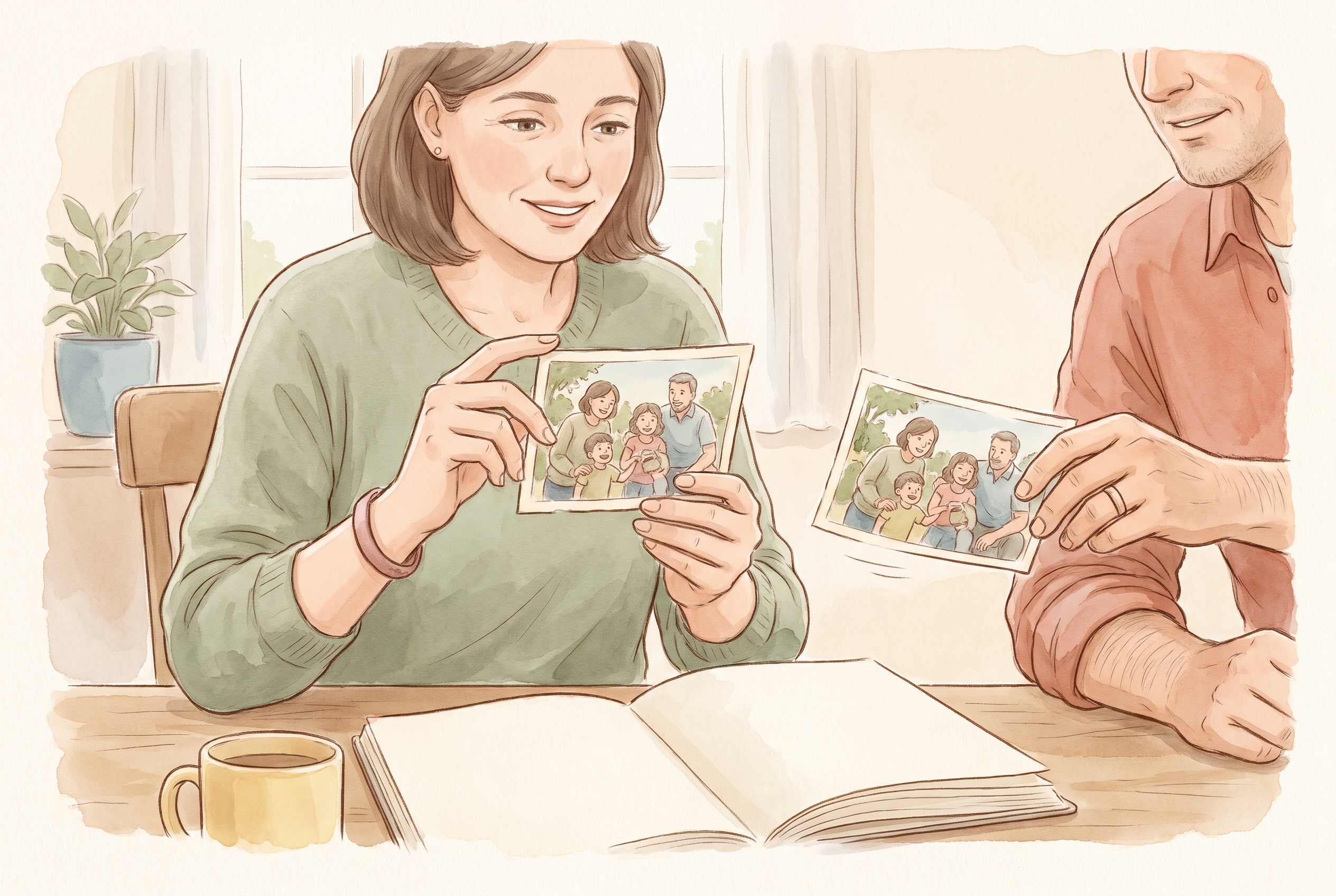
Digital kidnapping is a documented practice, not an urban legend. Strangers save a public photo of a child and repost it under a new identity, sometimes building whole fictional personas. Fast Company reported on "baby role-play" communities in 2014, and Quartz covered the same practice in 2018, describing accounts that lift other people's children into invented storylines. No child is physically taken; the theft is of the image and the identity attached to it.
It feels violating because it is. A photo you shared to show family a small moment becomes raw material for a stranger's game. The useful response is calm and procedural, not panicked — and the strongest protection is upstream, in how and where you post in the first place.
What to do if it happens to your child's photo
Act in order: preserve evidence, then report, then follow up. Rushing to delete the stranger's post before you've documented it leaves you with nothing to show the platform.
- Save evidence first. Screenshot the reposted photo, the account name, the caption and the URL. Note the date. If the post is deleted later, your screenshots are what remain.
- Report the account for impersonation. Most major platforms have a specific report path for accounts pretending to be, or misrepresenting, another person — including posting someone else's child as their own.
- State plainly that the image is of a minor. Platforms treat reports involving children more seriously. Say clearly that the photo shows your child and was taken and reposted without permission.
- Ask for removal, not just a label. Request that the specific image be taken down, and keep the reference number the platform gives you.
- Tell the people who still have the original. If relatives or friends reshared your photo publicly, ask them to set it private so the stranger can't re-copy it. Our guide on asking relatives not to post your child's photos has gentle wording for that conversation.
This suits any parent or guardian who finds a reposted image. It's slow, undramatic work, and it's the work that actually moves platforms.
How to make it much less likely
The single biggest factor is audience. A stranger can only kidnap a photo they can see. Shrinking who can see your posts removes most of the opportunity at once.
- Set your audience to people you've chosen, not "public" or "followers of followers."
- Post fewer public photos of your child's face overall, and favour shots that don't identify them clearly.
- Leave out names, birthdays, school names and locations — the details that let a stranger build a convincing fake persona.
- Turn off or review location tagging before posting.
- Think about resharing: a private photo becomes public the moment a relative reposts it, so agree on rules together.
For the bigger picture on why many families are stepping back from public posting entirely, see why some parents keep kids off social media. And because reposting and AI misuse overlap, what AI changes about posting children's pictures is worth reading alongside this.
Why private audiences beat public feeds for family memories
A public feed is optimised for reach, which is exactly the wrong goal for a child's photo. Reach is how a stranger finds the image in the first place. The fix isn't to stop recording your family's life — it's to record it somewhere the audience is small and chosen on purpose.
When grandparents, a co-parent and a couple of close relatives are the whole audience, there is no public surface for a stranger to copy from. You still get the warmth of sharing a first steps video or a messy-dinner photo; you just skip the open door. If you're weighing where photos should live, a photo journal or the camera roll covers the trade-offs.
An honest limitation
No step guarantees a photo never leaks. Anyone you share with can screenshot, and a determined person can re-copy. Reporting is not instant, and platforms don't always remove content as fast as you'd want. What you control is the size of the exposure: fewer public images, fewer identifying details and a chosen audience mean fewer chances for this to start, and faster evidence if it does.
Where this fits with Kaiary
If the lesson here is "share with chosen people, not the open internet," that's the whole idea behind Kaiary's family sharing. It's a private family journal where photos, words and voices of everyday life live together, and you decide who's invited to see each memory — there's no public feed for a stranger to copy from. You can read how we handle your family's data in our privacy promise. Availability and features vary by region and plan; check the current App Store listing for what's offered where you are.
It won't stop someone misusing a photo you post elsewhere. But for the everyday record of your family's life, keeping it in a chosen-audience journal removes the public door this whole problem walks through.
What is digital kidnapping?
It's when a stranger copies a child's photo from a public post and reposts it as if the child were their own, often inventing a name and backstory in "baby role-play" accounts. Reputable outlets including Fast Company and Quartz have reported on the practice.
How do I report someone using my child's photo?
Screenshot the post, account and URL first, then use the platform's impersonation or misrepresentation report path. State clearly that the image shows your child, a minor, and was reposted without permission, and keep any reference number you're given.
How can I prevent my child's photos being stolen online?
Set your audience to chosen people rather than public, post fewer identifiable photos, and leave out names, locations and dates. A stranger can only copy a photo they can see, so a small private audience removes most of the risk.