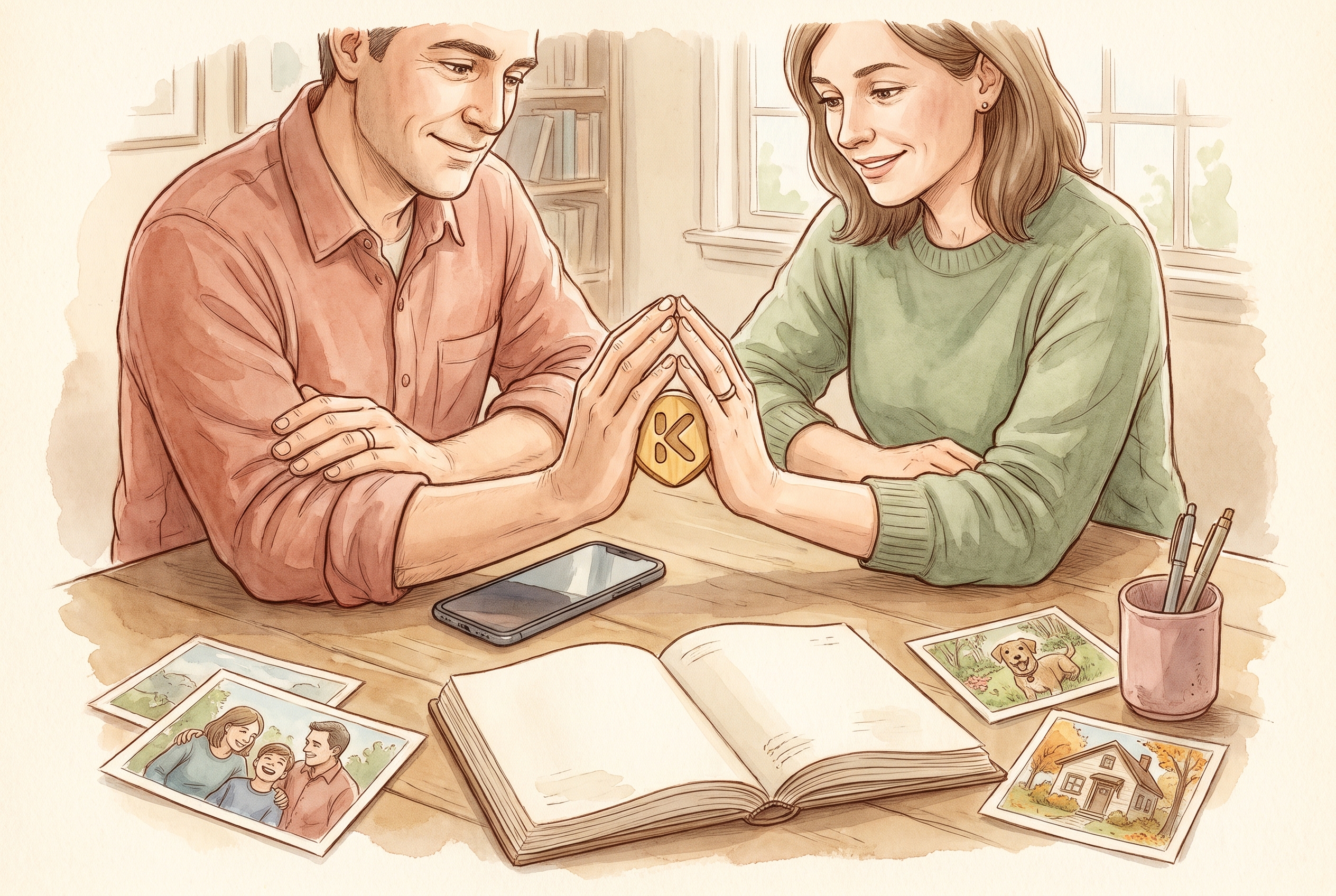
- A family code word, agreed in person, is the simplest defense against AI voice-clone emergency calls.
- Choose a private phrase that isn't findable online — no pet names, teams, places or birthdays.
- Share it face to face or by voice, never by text, and tell every grandparent.
- If a call feels urgent, hang up and call back on a number you already have saved.
Scammers can now copy a familiar voice from a short clip of someone speaking, then call a parent or grandparent with a panicked story: an accident, an arrest, a wired payment needed right now. The voice sounds right, so the fear feels real. A code word short-circuits that fear with a simple test the real person can pass and a stranger cannot.
This isn't hypothetical caution. The US Federal Trade Commission's consumer alert "Scammers use AI to enhance their family emergency schemes" (March 2023) warns that criminals use voice cloning to impersonate relatives. The FBI's Internet Crime Complaint Center public service announcement of 3 December 2024 on generative-AI fraud specifically recommends agreeing on a secret word or phrase with family. A code word is the step both point to.
Why a family code word works
It works because it moves the test from "does this sound like them?" to "do they know our word?" Voice is now easy to fake; a private phrase shared only in person is not. The caller either knows it or doesn't, and the panic in their story stops mattering.
Public videos where family members talk are raw material for a clone — a birthday message, a graduation speech, a cheerful clip. That's one more reason to decide who can see a family memory before you post it publicly. A code word doesn't require you to hide anything; it just adds one check that can't be scraped from the internet.
Choose a word that isn't online
Pick something private, memorable and absent from your public life. Avoid anything a search could surface.
- Don't use a pet's name, a child's nickname, a street, a team or a birthday — these show up in posts and profiles.
- Don't use the name of the family business, the dog everyone photographs, or a holiday destination you share pictures from.
- Do pick something slightly odd and specific: a made-up word, an inside joke that was never written down, two unrelated nouns together.
- Keep it short enough to say under pressure and say it the same way every time.
The goal is a phrase a real relative can produce instantly and a stranger has no path to guess or find.
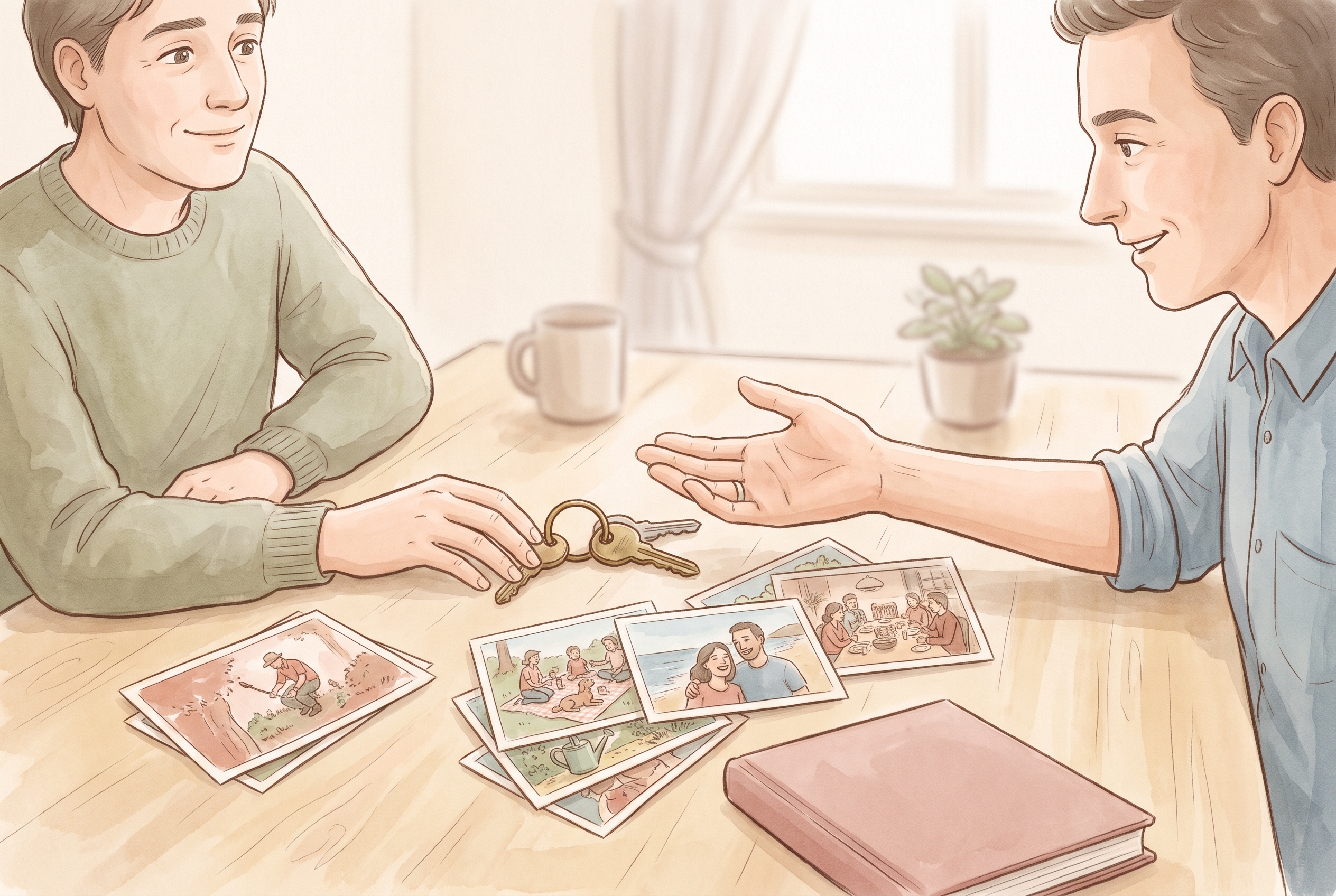
Agree it face to face, not by text
Share the word in person, or by voice on a call you placed to a number you already trust — never by text, email or chat. Those channels can be intercepted or screenshotted, and they leave the word sitting in a message history.
Saying it out loud together also fixes it in memory and gives you a moment to agree on how it's used: the caller says the word unprompted, or you ask for it, and if they stall or change the subject, that's your answer.
Tell every grandparent — they're the common target
The family-emergency scam is often aimed at older relatives, so the people most likely to receive the call are the ones who most need the word. Walk each grandparent through it plainly, without alarm.
- Explain the scam in one sentence: a fake call using a cloned voice asking for urgent money.
- Share the code word in that same in-person conversation.
- Agree on one rule they can remember: no word, no money, no exceptions.
- Remind them a real relative in a real emergency will happily give the word.
If a grandparent worries they'll forget it, that's fine — the hang-up-and-call-back step below protects them even without the word.
Practise once, then keep it simple
Run it once so it isn't theoretical. Call a relative, work the word into the conversation, and have them confirm it back. One rehearsal is enough to make the word feel usable rather than forgotten.
Teach the callback as the backstop. Even if someone blanks on the code word under stress, "hang up and call back on a number you already know" defeats the same scam on its own.
Keep the real voice — on your terms
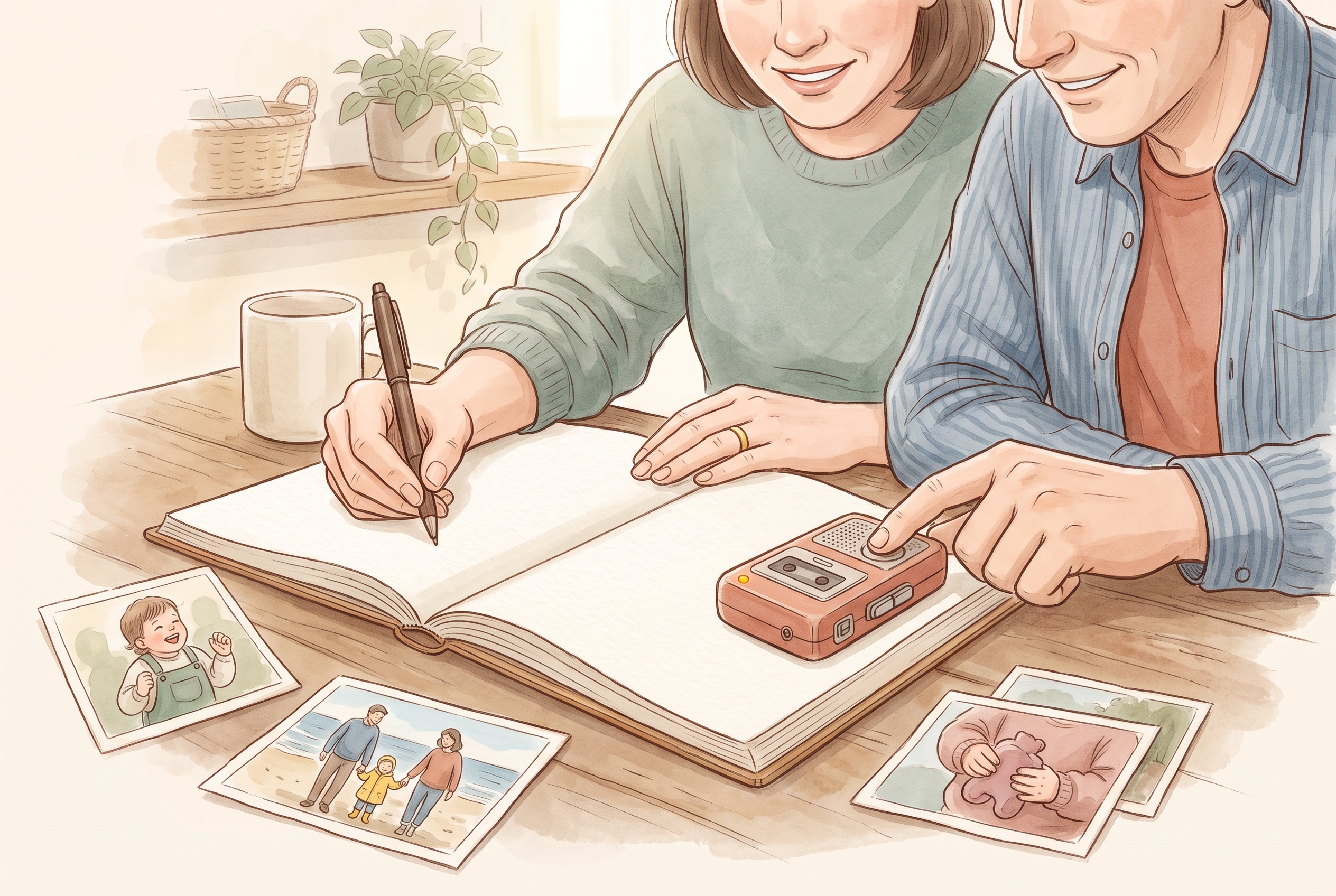
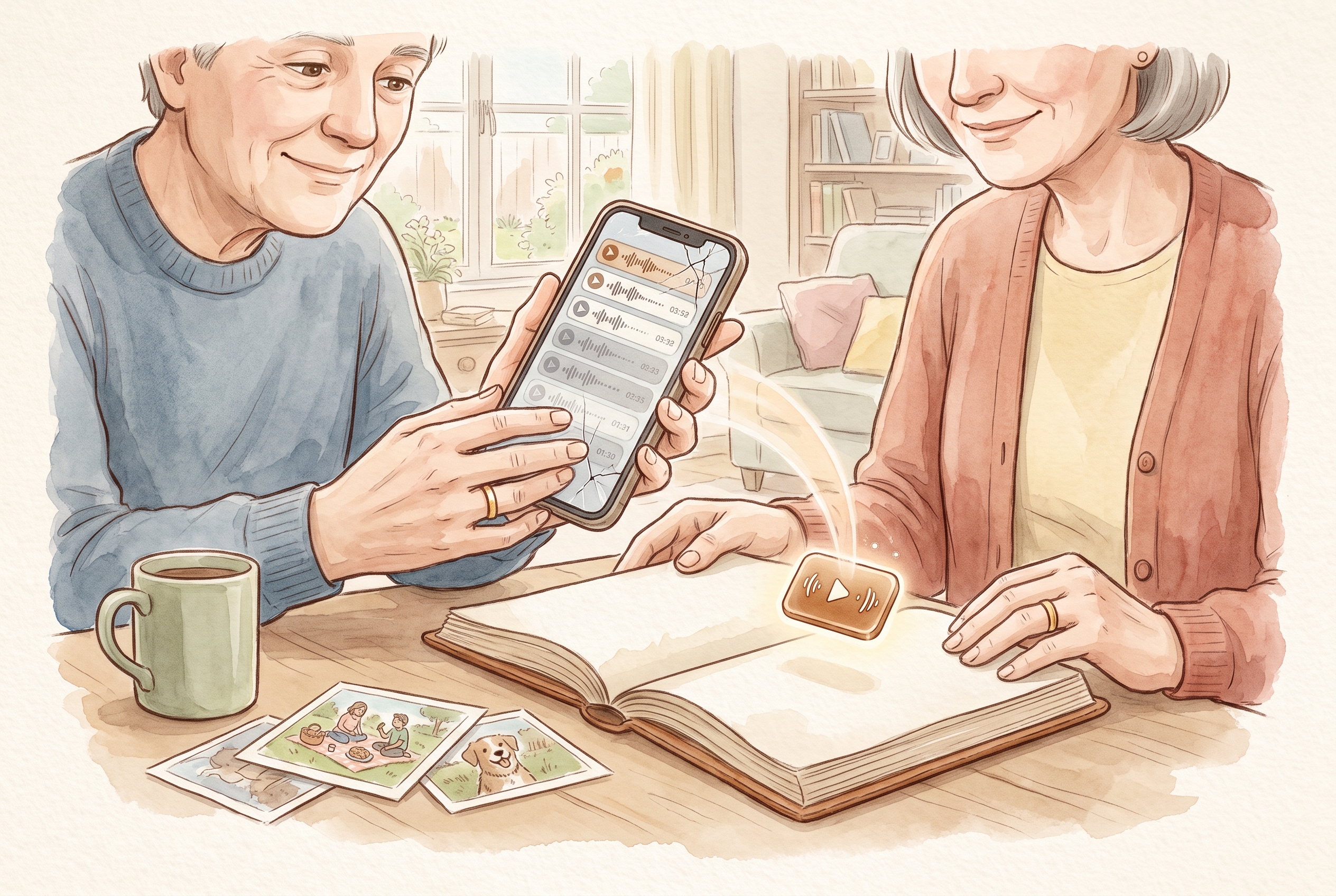
A code word protects the people; keeping the actual voices is a separate, kinder project. The sound of a grandparent telling a story is worth holding onto deliberately rather than leaving scattered in public clips. If you're already thinking about audio, our guide to saving voicemails is a good companion read.
Kaiary is one way to do this privately: a family journal where photos, words and voice recordings live together, and where family sharing lets you choose exactly who sees and hears each memory. Keeping the voices you love inside a space you control — rather than only on open feeds — means the recordings exist for your family, not for scrapers. You can read Kaiary's privacy promise for how those audience choices work.
To be clear about limits: a code word and private storage reduce the material and the risk. No tool, including ours, can guarantee a voice will never be copied from somewhere else. The code word is what still protects you if it is.
What is a good family code word?
A short, private phrase that doesn't appear in your public life — a made-up word or two unrelated nouns works well. Avoid pet names, nicknames, places, teams or birthdays, since those can be found online.
How do scammers clone a relative's voice?
According to the FTC's March 2023 consumer alert, criminals can use AI to mimic a voice from a short audio clip, then call a relative with a fake emergency. Public videos where someone speaks can serve as that raw material.
What should I do if an emergency call feels real?
Hang up and call the person back on a number you already have saved, not one the caller provides. Ask for the code word. A genuine emergency survives a short callback; a scam usually does not.