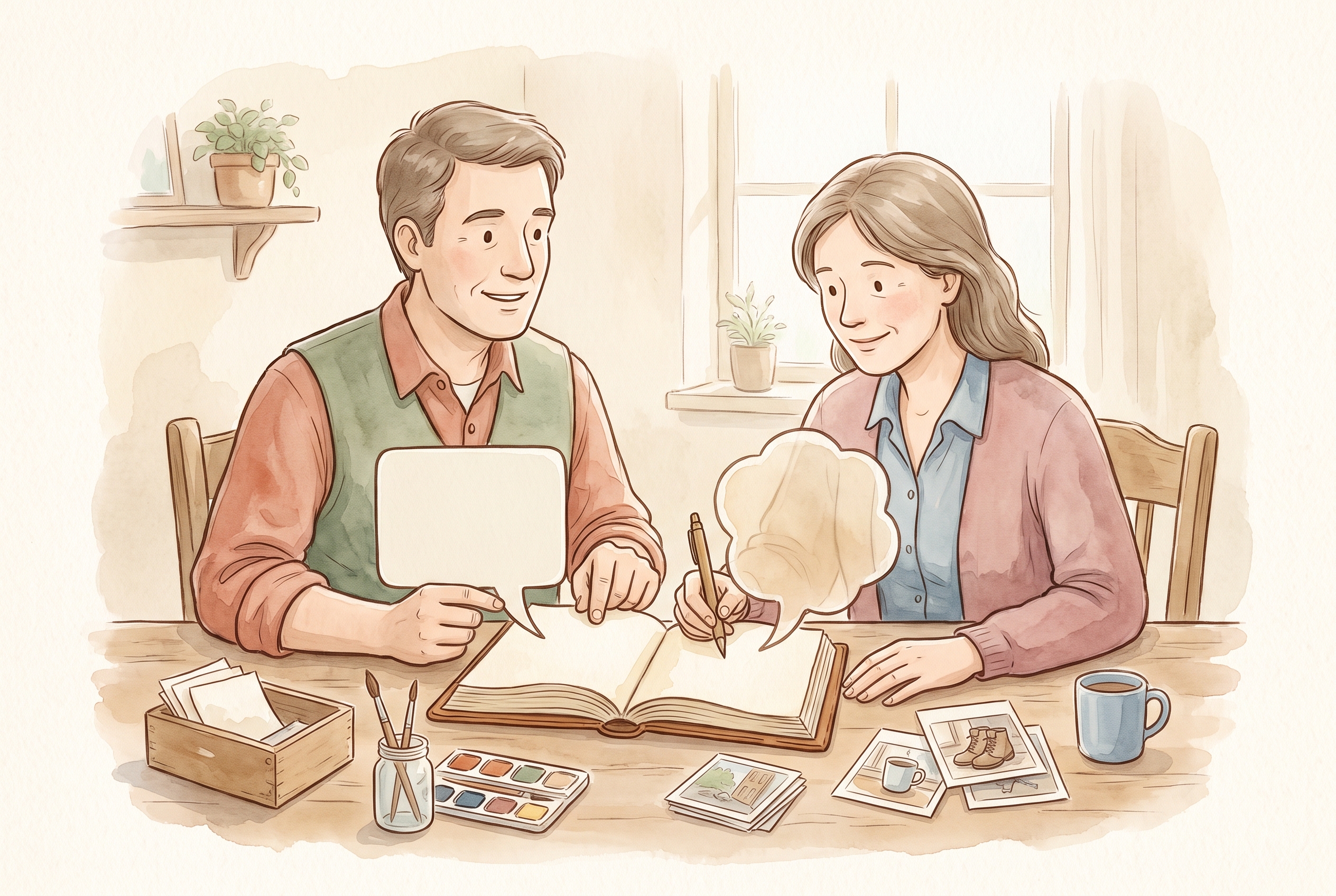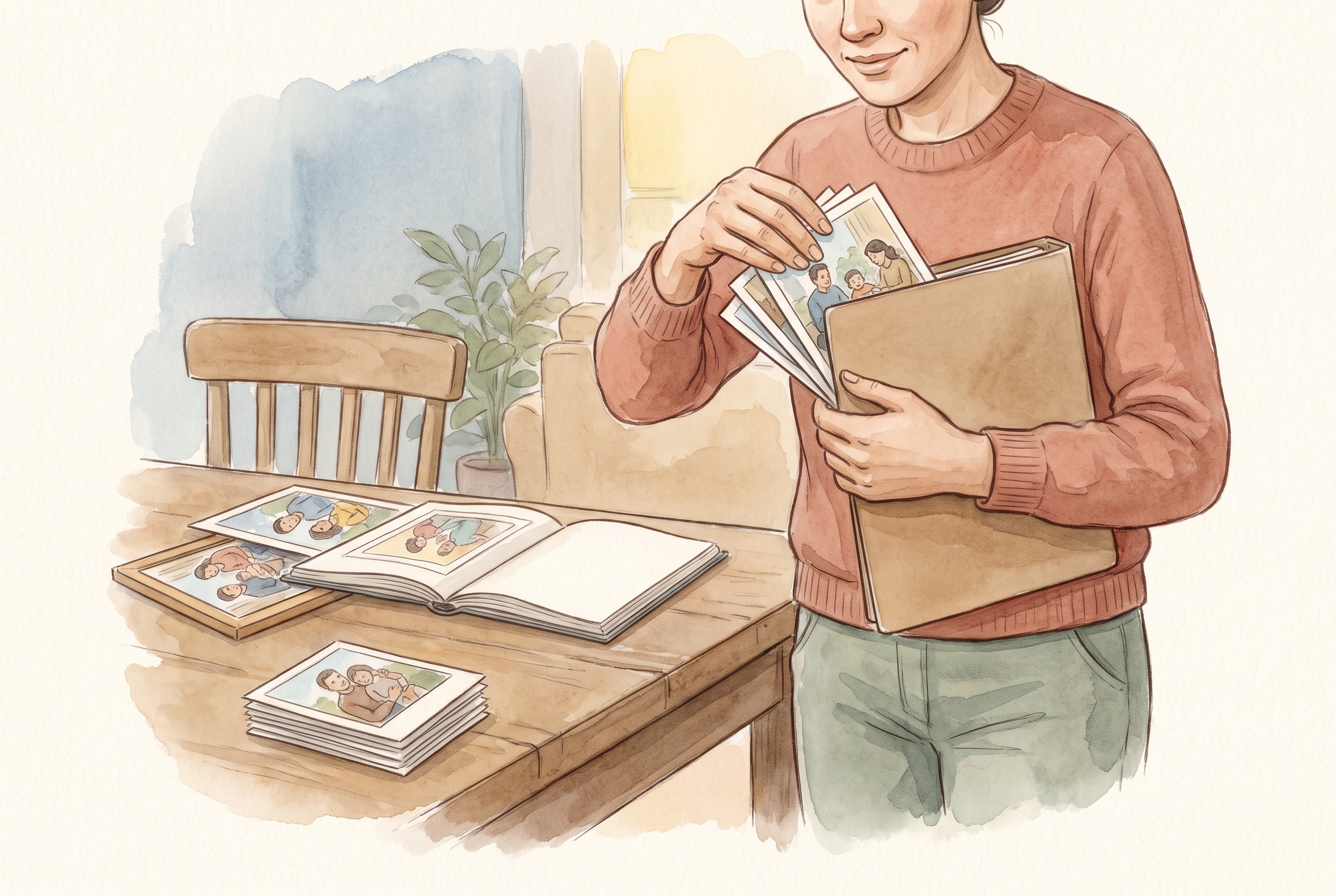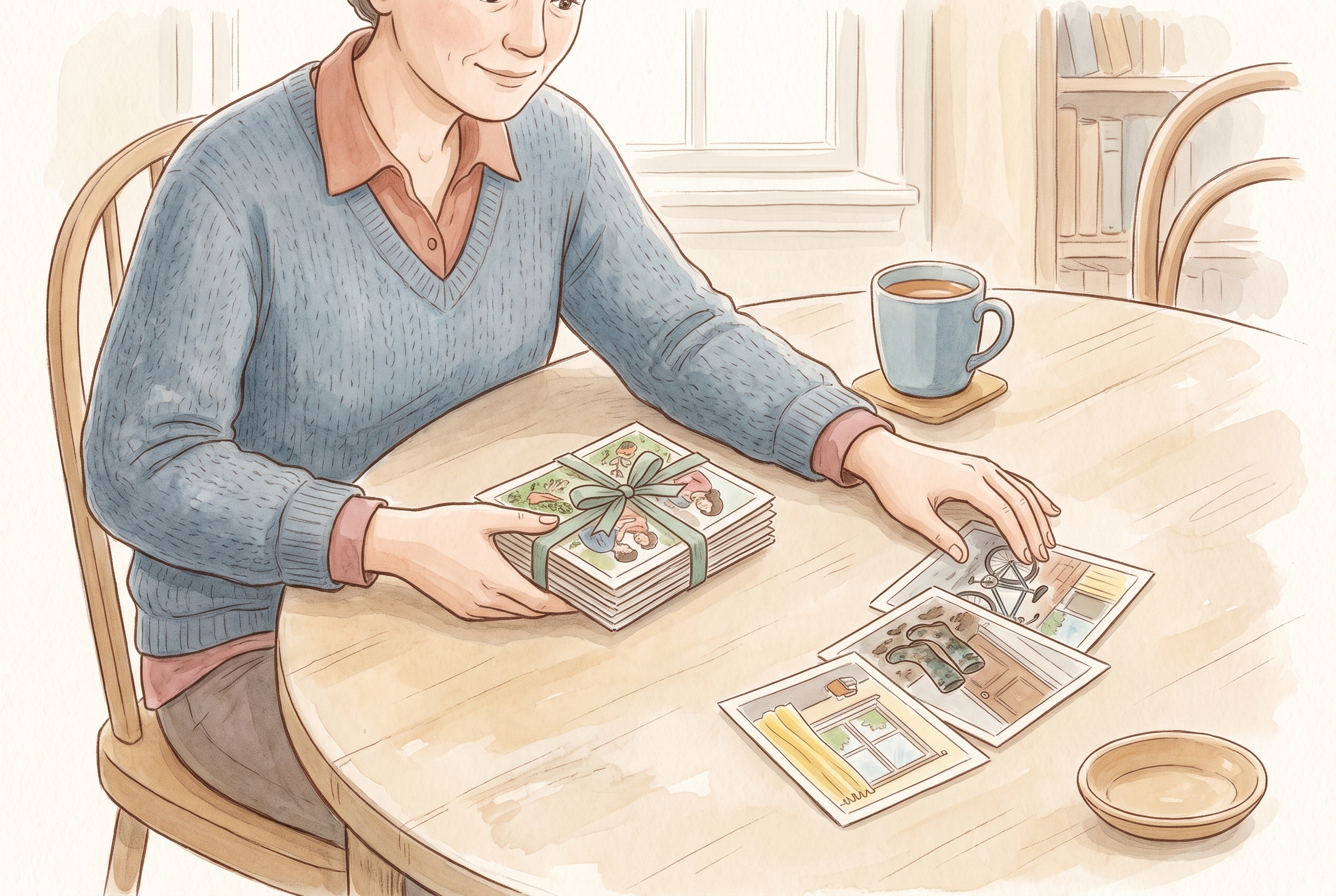
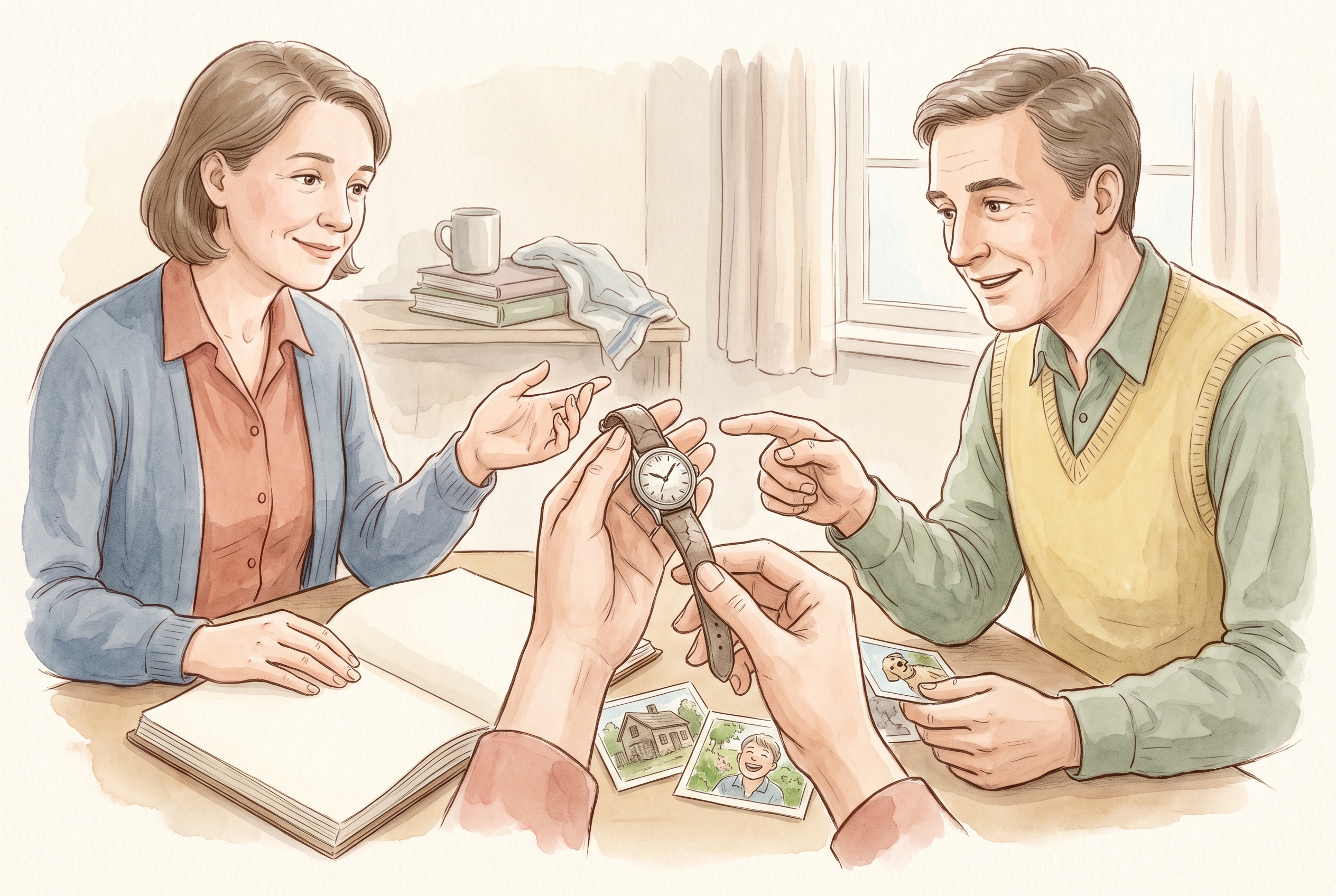
- Anchor each keepsake to a clear photo, then write its story beside that image.
- Separate three layers: what you can verify, what you were told, and what's still unknown.
- Always name who told you and roughly when — the source matters as much as the story.
- Never let a caption tool invent provenance; leave honest gaps as gaps.
Start with the object in front of you
Pick one keepsake and photograph it plainly — the whole thing, then any detail that carries meaning, like an engraving, a repair, or a maker's mark. A clear picture is the anchor. Everything you write afterward hangs on it, and later you can bring several photos of the same object together in a single journal entry so the object and its story stay in one place.
Resist the urge to tidy the story into something neater than the truth. A watch with a cracked face and an unknown owner is still worth recording. You are documenting what you know, not producing a certificate.
Separate what you know from what you were told
The most useful thing you can do when you document family heirloom history is mark the difference between fact and hearsay. "This was my grandmother's" is different from "I think this came from her side." Both belong in the record — just labelled honestly.
- What you can verify: an engraved date, a receipt, a photograph showing the object in use.
- What you were told: who owned it, where it came from, why it mattered — and who told you.
- What is still unknown: gaps you'd like to fill, questions to ask a relative later.
Keeping these three layers distinct protects the story from drifting. A remembered claim can harden into false certainty over the years. If you're weighing exact wording against a recollection, the habits in distinguishing a remembered conversation from an exact quote apply here too.
Name the source, not just the story
Every keepsake story reached you through someone. Write down who told you and roughly when. "Aunt Ruth explained this at the 2024 reunion" is a real, checkable source. "Family legend" is not — though you can still note it as legend.
For example, an entry might read: "Brass compass. Dad says it belonged to his father, who used it in the merchant navy. Dad wasn't sure of the ship. I haven't confirmed this." That single note tells a future reader exactly how solid each claim is.
Record five details that usually go missing
When people describe a keepsake years later, the same facts tend to have vanished. Capture these while someone still remembers them:
- Who owned it first, and how it passed to the next person.
- Where it was kept or used — a mantel, a workshop, a pocket.
- Any repair, damage or alteration, and the story behind it.
- Names for it the family used that outsiders wouldn't understand.
- The person telling you, and the date they told you.
You don't need all five for every object. Even two or three, honestly attributed, are far more than most keepsakes ever get.
Keep the object with its people, not in a separate list
A spreadsheet of objects and a shoebox of photos drift apart over time. It's easier to keep the photo, your written notes and any voice recording together in one family journal entry, so the object and everyone connected to it stay linked. When you later organize things, the approach in organizing a year of memories without rewriting it works for objects as well as events — group, don't perfect.
If a keepsake connects to several relatives, you can choose who sees its entry and invite the people who might add to it, using chosen family audiences. Someone else may remember the ship's name you couldn't confirm.
Where a caption can help — and where it must not
An assistant can tidy a caption or turn a real, sourced memory into an illustrated page. What it must never do is invent provenance. If you don't know where the compass came from, no tool should fill that gap with a plausible-sounding origin. Leave unknowns as unknowns; a labelled blank is honest, an invented answer is a false record your descendants may trust.
The most valuable thing you can pass on with an object isn't a polished story — it's an honest note about how much of the story you actually knew.
A quiet word on what this is not
Documenting where a keepsake came from is memory work, not appraisal or estate planning. This guide won't tell you what an object is worth, who should inherit it, or how to prove legal ownership — those are separate questions for separate professionals. The aim here is narrower and, in its own way, more lasting: to keep the true story of an object attached to it, in the words of the people who knew it.
What does it mean to document family heirloom history?
It means recording where a keepsake came from — its first owner, how it passed down, who told you, and what remains unknown — and keeping those notes attached to a clear photo of the object, so the story doesn't drift from the item over time.
What if I don't know where an heirloom came from?
Record what you do know and mark the rest as unknown. "Origin uncertain" is an honest, useful note. Avoid guessing or letting any tool invent a plausible history, because a future reader may treat that invention as fact.
Should I write the story or record the person telling it?
Do both when you can. A short voice recording of the relative who knows the object keeps their exact account, while written notes let you mark what's verified versus recalled. Together they preserve both the telling and its reliability.